ASL Digital communication has exploded. Text messages, social media, and instant messaging dominate how we connect. Yet many people still don’t understand ASL meaning in text, leading to awkward conversations and social missteps. This guide breaks down what ASL really means, how to respond gracefully, and why context matters more than ever in 2025.
What Does ASL Stand For in Text?
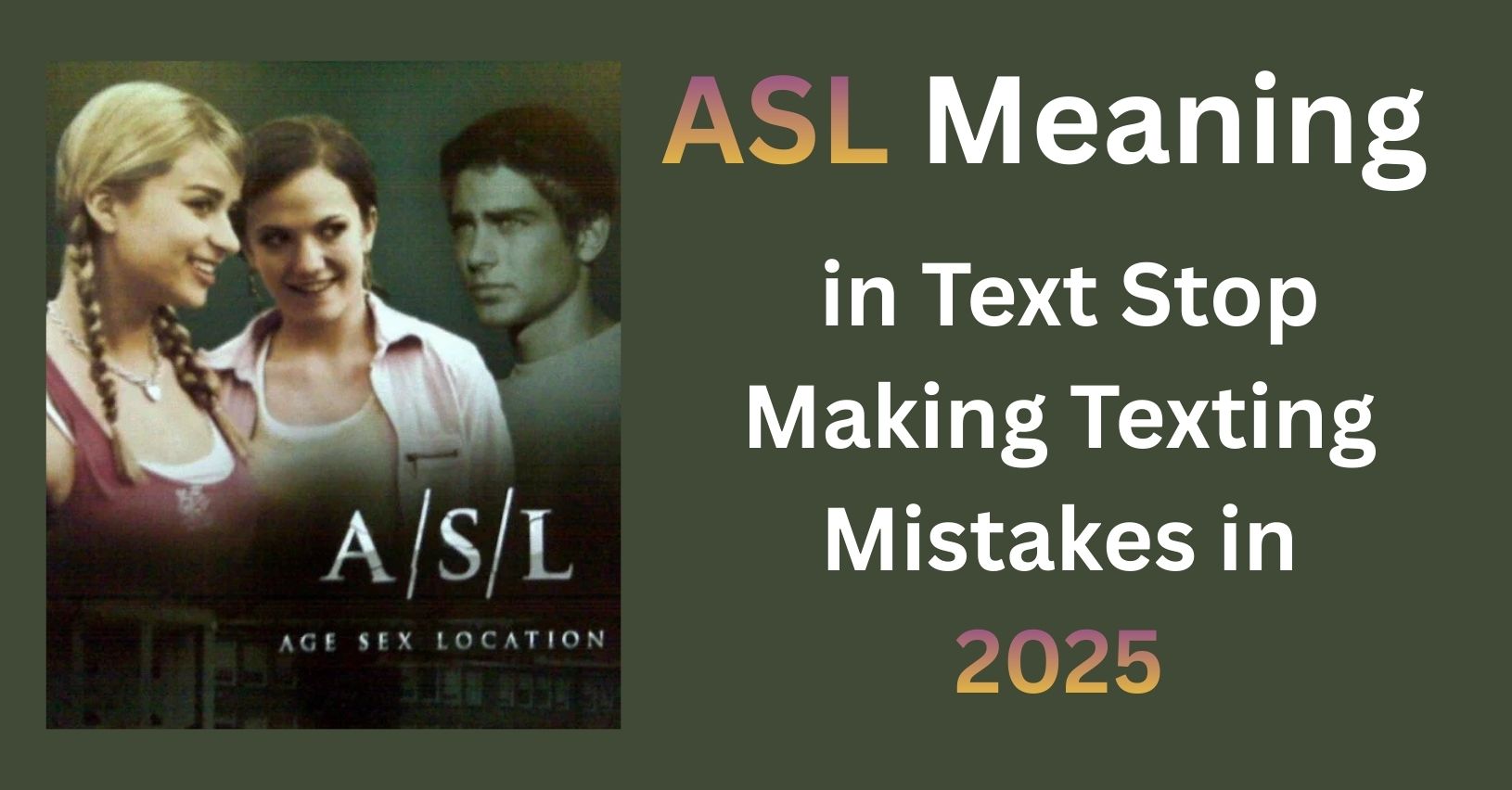
ASL stands for Age, Sex, Location. This internet slang originated during the early days of online chat rooms like AOL Messenger, MSN Messenger, and Yahoo Chat in the 1990s and early 2000s. People used ASL meaning in texting as a quick icebreaker to get basic information about someone they’d just met online.
Today, what ASL means has shifted dramatically. Most people recognize the ASL abbreviation meaning as outdated or even ironic. Younger generations see it as a nostalgic reference to early internet culture.
How ASL Meaning Changed Over Time?
ASL internet slang peaked in popularity during the 2000s when online anonymity was assumed. People felt comfortable sharing demographics because the internet felt impersonal. Fast forward to 2025, and privacy concerns have reshaped digital communication entirely. Platforms changed.
Modern users encounter ASL chat less frequently, but it hasn’t disappeared. Communities still use it ironically, nostalgically, or genuinely, depending on context. What does ASL mean? Snapchat differs slightly from
Why It’s Important to Understand ASL?
Three letters carry disproportionate power. ASL meaning in text can feel neutral, intrusive, or curious depending on the platform, sender familiarity, and conversation tone. Someone asking on a dating app has different intentions than someone asking on a professional networking site.
ASL text message meaning shifts based on relationship dynamics. A coworker asking feels inappropriate. A new friend asking feels natural. A bot asking feels threatening. Context transforms everything about ASL in texting.
More post: Master “FT Meaning Text” and Navigate Digital Communication Like a Pro 2025
Consider These Factors When Encountering “ASL?”
- Platform Matters Greatly
- Dating apps normalize demographic questions. LinkedIn doesn’t. Reddit discussions vary by community. TikTok ASL meaning differs from ASL meaning Snapchat because audiences and purposes differ.
- Familiarity Shifts Everything
- Messages from friends carry a different weight than messages from strangers. Your best friend asking “ASL?” is playful. A stranger asking the same question triggers caution.
- Time Sensitivity Matters
- ASL acronym definition includes an implicit time component. These questions typically kick off quick, casual conversations. You’re expected to respond fast or move on.
- Cultural and Generational Awareness
- Not everyone understands internet abbreviations the same way. Older generations might not recognize the ASL meaning 2025 trends. International users might not understand ASL informal texting norms.
- Privacy Concerns Are Real
- Sharing personal information with strangers online carries genuine risks. Scammers use demographic information for targeting. Stalkers use location data. Predators use age.
What ASL Does Not Mean?
Common confusion surrounds the ASL abbreviation’s meaning. People assume it always refers to American Sign Language. It doesn’t. Context determines whether what ASL means references internet slang or sign language. This distinction prevents embarrassing misinterpretations.
ASL might reference American Sign Language when someone says “I teach ASL” or “Do you speak ASL?” Context makes this obvious. Someone asking “ASL?” randomly in chat means age, sex, and location. Someone discussing accessibility or inclusivity means sign language. A conversation topic clarifies meaning instantly.
Alternatives to Using “ASL.”
Modern digital communication has evolved beyond the bluntness of raw “ASL?” messaging, requiring us to rethink how we ask personal questions online. Instead of relying on outdated internet abbreviations like ASL, meaning in text.
You accomplish the exact same informational goal with a different language that sounds considerably more human, considerate, and less intrusive to the recipient. This approach to ASL in texting alternatives builds stronger connections.
Polite Alternatives to “ASL.”
“Would you mind sharing a bit about yourself?” This opens a conversation without demanding specific information. It invites sharing without pressure.”If it’s okay, where are you from?” This asks location respectfully. The qualifier “if it’s okay” acknowledges boundaries and invites consent.
Casual Alternatives to “ASL.”
“Hey! Where are you from?” This works perfectly among friends. It’s direct without sounding demanding. It assumes shared comfort with casual questions.”What’s your age if you don’t mind me asking?” Simple and straightforward. The qualifier shows you respect boundaries while keeping things relaxed.
Professional Alternatives to “ASL.”
“Could you tell me more about your background?” This works for networking situations. It’s professional and open-ended.”May I ask where you’re based?” This professional phrasing respects hierarchy and formality. It’s appropriate for job interviews and professional contexts.
The Evolution of ASL in Modern Chat Culture
ASL internet slang peaked in the 1990s and early 2000s. Chat rooms like AIM and Yahoo made online anonymity standard. People didn’t know each other, so asking demographics made sense. You needed basic information about your anonymous conversation partner.
Modern platforms prioritize interests over demographics. Reddit ASL meaning threads differ from TikTok ASL meaning because communities differ. Privacy consciousness has exploded. Data breaches taught people to be careful.
AOL Messenger Era (1990s-2000s)
AOL Messenger dominated. Anonymity was assumed. Asking “ASL?” was the standard icebreaker. People expected to answer. Chat rooms operated on demographic-based connections. Location helped find people nearby. Age helped you find peers. The culture normalized sharing basic information quickly.
Emerging Social Media (2000s-2010s)
MySpace appeared. Facebook required real names. Twitter emerged. The shift toward real identity online began. ASL meaning in text started feeling dated. Social media profiles already display information publicly. Asking redundant questions seemed unnecessary. Usage declined sharply.
Privacy-First Culture (2010s-2025)
Privacy concerns exploded. Data breaches became routine. GDPR happened. People learned to be protective. ASL text message meaning became mostly nostalgic or ironic. Younger users encounter it through older people or as jokes. Platforms emphasize shared interests over basic demographics.
When Not to Respond to “ASL?”
- Sometimes, silence is the smartest response to unsolicited personal questions in digital communication.
- Not every message deserves engagement, especially those that feel uncomfortable or inappropriate.
- Trust your instincts completely when something feels off or suspicious in online conversations.
- Protect yourself proactively by recognizing red flags before responding to strangers.
- Ignoring or blocking is completely valid and requires no explanation or justification to the sender.
- Your safety matters more than politeness when responding to personal demographic questions.
- It feels invasive or inappropriate when your gut tells you something’s wrong about the question.
- Listen to that feeling rather than dismissing discomfort to avoid being rude.
- The sender is persistent without respecting boundaries when they keep asking after you’ve declined.
- Continued persistence is a major red flag that indicates potential scammer, bot, or bad intent behavior.
- You suspect it’s a bot, scammer, or fake profile when something seems automated, repetitive, or too perfectly scripted.
- The conversation has uncomfortable energy, even when you can’t articulate exactly why something feels wrong about it.
Why You Should Be Mindful of Abbreviations?
Text strips tone completely. Sarcasm vanishes. Context gets lost. Abbreviations compound this problem. What does ASL mean becomes ambiguous. Some people find direct personal questions invasive. Non-native speakers don’t understand internet slang like ASL.
ASL abbreviation meaning assumes shared cultural knowledge. Not everyone has it. Generational gaps exist. International users might not understand. Neurodivergent people might struggle with decoding.
The Communication Cost of Abbreviations
Tone Misinterpretation
- “ASL?” sounds cold and demanding in text
- Lacks warmth compared to fuller questions
- “Where are you from?” feels considerably warmer
- Abbreviations save time but lose humanity
- ASL in texting gets interpreted negatively
- Abbreviated nature creates a harsh perception
- Tone shifts dramatically without full words
Exclusion Through Jargon
- Not everyone speaks internet slang fluently
- Using abbreviations excludes significant populations
- Someone learning English might not recognize ASL slang
- Older generations often don’t understand modern internet abbreviations
- People from different cultures might not understand jargon
- Full sentences include everyone, regardless of background
- Accessibility improves with clearer communication
- Language barriers increase with excessive abbreviations
Ambiguity Creates Confusion
- Is it American Sign Language or demographics
- Is it age, sex, location, or something else
- Is “asl” slang for “as hell” as an intensifier
- Funny asl meaning jokes rely on this ambiguity
- In serious conversations, ambiguity creates major problems
- Clear language prevents misunderstandings completely
- Multiple interpretations lead to a communication breakdown
- Context alone shouldn’t determine critical meanings
Professional Perception
- ASL internet slang feels casual in formal contexts
- Feels unprofessional in business communications
- Recruiters don’t want to see it in applications
- Clients reject emails containing internet abbreviations
- Teachers mark it down in academic papers
- Context determines appropriateness absolutely
- Professional settings demand full, clear language
- Your credibility suffers from excessive abbreviations
- First impressions matter in professional environments
ASL vs. Other Common Text Acronyms
Understanding how ASL compares to other text message acronyms helps you use each appropriately. Some acronyms fit everywhere. Others fit specific contexts. Knowing the difference improves your texting significantly.
More post: What Does WTM Mean in Text? Master This 2025 Slang & Reply Like a Pro
| Acronym | Stands For | Meaning | Best Context |
| ASL | Age, Sex, Location | Personal demographics | Informal chat, dating apps (outdated) |
| BRB | Be Right Back | Temporary absence | Casual conversations, gaming |
| TTYL | Talk To You Later | Ending conversation | Casual, friendly sign-offs |
| SMH | Shaking My Head | Disapproval/sarcasm | Casual, expressing disagreement |
| LOL | Laugh Out Loud | Finding something funny | Universal, casual tone |
| FYI | For Your Information | Sharing info | Professional and casual contexts |
Common Misunderstandings Around “ASL”
Confusion happens constantly. Someone mentions teaching ASL, and you wonder if they mean internet slang. Someone asks, “ASL?” randomly, and you’re unsure if it’s American Sign Language. Context clues help tremendously. Learning to recognize them prevents embarrassing mix-ups.
How to Tell the Difference?
Statement “I teach ASL”
- Educational or professional setting context
- Clearly refers to American Sign Language
- A person is sharing their profession or skill
- No ambiguity in meaning
Statement “ASL?” (Random question in chat)
- Casual conversation, dating app, or chat room context
- Asking for demographic information
- Internet slang version of Age, Sex, Location
- Outdated but still occasionally used
Statement “We need ASL interpreters for the event.”
- Event planning or accessibility discussion context
- Refers to American Sign Language
- Planning accommodations for deaf attendees
- Professional and inclusive communication
Statement “That party was boring asl”
- Casual texting about an event context
- “asl” means “as hell” here
- Functions as a slang intensifier
- Completely different meaning from the demographic acronym
Statement: “Do you speak ASL?”
- Question about language skills context
- Refers to American Sign Language
- Direct question about communication ability
- Professional or educational setting
Statement “ASL on Urban Dictionary”
- Someone looking up slang meanings in context
- Might find multiple definitions listed
- Internet slang version appears in results
- Shows how the platform shapes understanding
Most Critical Understanding
- Your conversation topic determines meaning instantly
- Discussing accessibility means sign language
- Chatting casually means demographics
- This distinction eliminates most confusion
- Context clues are your most valuable tool
- Platform and relationship matter significantly
- Never assume without considering the surroundings
Frequently Asked Questions
What does ASL mean in 2025?
ASL stands for Age, Sex, Location, an outdated internet slang question from early chat rooms. Today, it’s mostly used ironically or nostalgically in casual texting and online conversations.
What does “boring asl” mean in text?
“Boring asl” uses ASL as slang for “as hell.” It means something is extremely boring. Here, ASL functions as an intensifier, not the demographic acronym.
What does ASL stand for in texting?
ASL means Age, Sex, Location in text. People use it to quickly ask for personal demographics in casual online chats, though it’s considered outdated by 2025 standards.
What is ASL Gen Z slang for?
Gen Z rarely uses ASL, meaning age, sex, and location. They’re more likely to encounter it ironically or see “asl” as slang for “as hell” (a completely different usage).
conclusion
Understanding ASL meaning in text and variations like what does ASL mean on Instagram, TikTok, Snapchat, and Reddit gives you communication superpowers. You’ll decode conversations faster. You’ll respond more thoughtfully. You’ll protect your privacy better. Digital literacy includes understanding internet abbreviations and when they fit.
Context always wins. Platform matters. Relationship matters. Intent matters. Train yourself to consider these factors before responding or asking. Respectful communication builds better connections. Full sentences trump abbreviations when clarity matters. Your privacy is valuable. Protect it confidently. The right people will respect your boundaries.

Passionate about innovation and growth. Dedicated to managing, optimizing, and creating seamless experiences while supporting diverse content and users with professionalism and clarity every day.