TBH Mean Ever found yourself staring at a text message, wondering if you should drop a “TBH” before sharing your real thoughts? You’re not alone. In today’s digital landscape, we’ve become masters of shorthand communication-but sometimes, that three-letter acronym doesn’t quite fit the vibe.
Understanding what TBH means in texting goes beyond just knowing it stands for “To Be Honest.” It’s about recognizing when this casual internet slang serves your message and when it makes you sound unprofessional or repetitive. Whether you’re texting a friend, crafting an Instagram caption, or sending a work email, your word choice shapes how people perceive you.
This guide dives deep into TBH’s meaning, explores when you should (and shouldn’t) use it, and offers 15 sophisticated alternatives that’ll elevate your communication game across social media communication, professional emails, and personal relationships. Let’s get into it.
What TBH Stands For in Texting & Online Communication
| Category | Information |
| Acronym | TBH |
| Full Meaning | To Be Honest |
| Word Count | Three words |
| Communication Type | Genuine, direct, or potentially vulnerable digital communication |
| Era of Emergence | Early 2000s |
| Reason for Creation | Character limits on SMS messages forced creative abbreviations |
| Timeline | From early 2000s to 2025 |
| Platform Popularity | Instagram DMs, Snapchat stories, comment threads |
| Instagram-Specific Usage | Comment threads for sharing candid opinions |
| Recognition Status | Universally recognized, rarely analyzed |
Purpose of “TBH”
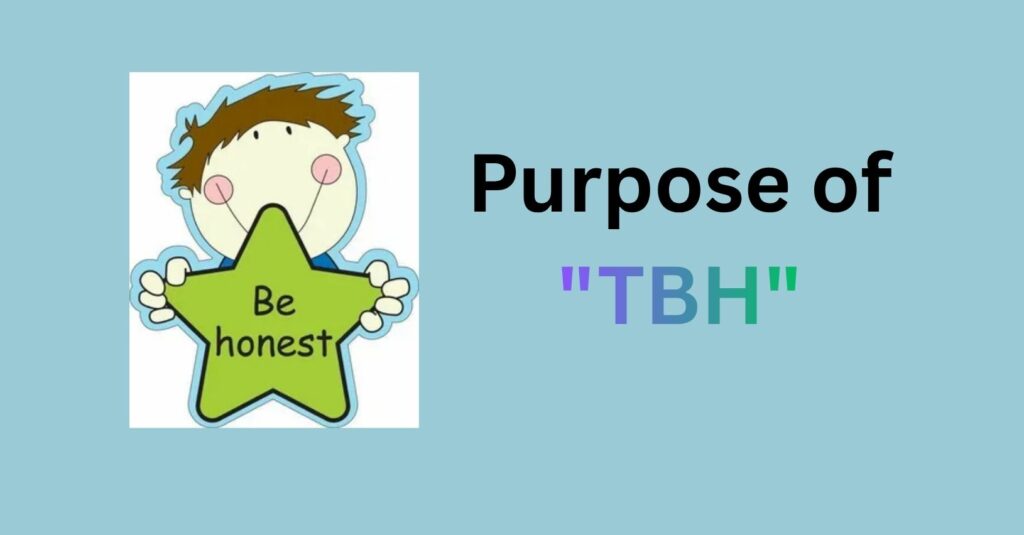
The purpose of TBH in chat goes beyond stating the obvious fact that you’re being honest. After all, shouldn’t everything you say be honest? Yet we still use it constantly. Why does this texting abbreviation matter so much in modern communication?
TBH serves three primary functions in digital expression: it softens criticism, intensifies praise, and introduces uncomfortable truths. When you text someone “TBH, I didn’t like your presentation,” the acronym creates a buffer-it signals vulnerability rather than attack. This softening technique makes TBH meaning in relationships particularly valuable when navigating tricky conversations with partners.
More post: https://vitalscap.com/gtg-meaning/
When to Use “TBH”
- TBH Mean Knowing when to deploy TBH separates savvy communicators from those stuck in outdated 2012 internet culture.
- Using TBH effectively shows awareness of modern digital expression.
- Social media communication thrives on authenticity.
- Instagram captions often use TBH naturally.
- TikTok comments also embrace TBH for unfiltered reactions.
- Twitter threads frequently use TBH to emphasize honesty.
- The TBH meaning on Snapchat usually signals an upcoming unfiltered reaction.
- In casual conversation with close friends, TBH fits naturally.
- Direct messages are another setting where TBH works well.
- Avoid TBH in professional communication to maintain credibility.
- Business emails should not include TBH due to their formal tone requirements.
- Academic writing and formal communication settings require more sophisticated language than TBH.
Why Use Alternatives to “TBH”?
You might wonder: if TBH works in casual tone settings, why bother with alternatives? Simple answer: variety reveals intelligence. Repeating the same phrase over and over makes you predictable and potentially irritating in any form of digital communication.
More importantly, different situations demand different levels of formality and nuance that basic internet slang can’t provide. Compare “TBH, I don’t think the design works” with “To be candid, I believe the current design doesn’t align with our objectives.” The second version demonstrates professional tone, respectful communication, and emotional intelligence-traits highly valued in workplace writing.
How Tone Affects Your Word Choice
Tone is everything in digital communication. Without facial expressions, vocal inflections, or body language, your words carry the entire burden of meaning. That’s huge pressure for a simple text message requiring careful tone selection and language clarity.
The three primary tones are casual tone (warm and relaxed for friends), neutral or polite tone (for workplace chats and community discussions), and professional or formal tone (for interviews, business presentations, and leadership communication). Understanding these distinctions helps you practice emotional awareness in messaging and choose alternatives that match your audience awareness perfectly every time.
Casual Tone and Its Impact on Everyday Messaging
A casual tone shapes your word choice by encouraging relaxed, friendly, and natural language. It allows you to speak the way you would with close friends, using phrases that sound warm and approachable. Casual wording often includes slang, abbreviations, or playful expressions that feel authentic in personal conversations. Because the goal is comfort, you don’t need overly polished vocabulary. However, using it in the wrong context can make you seem careless or unprofessional.
Polite or Neutral Tone for Balanced Communication
A neutral or polite tone guides you toward choosing respectful, measured language that suits workplace chats, school discussions, and general group communication. This tone avoids extremes-neither too formal nor too casual-making it ideal for clarity and harmony. It helps you express honesty without sounding harsh and professionalism without sounding rigid. Your word choices in this tone often include softeners like “might,” “perhaps,” or “I think” to maintain diplomacy.
Professional or Formal Tone for High-Stakes Situations
A professional or formal tone pushes you to select precise, respectful, and polished language. It’s commonly used in business emails, interviews, presentations, and leadership communication where credibility is crucial. This tone avoids slang, abbreviations, and overly casual phrases that may weaken your message. Instead, it focuses on structure, clarity, and authority to deliver information with confidence. Choosing formal alternatives shows you understand professional expectations and respect the seriousness of the conversation.
15 Professional, Polite, and Casual Alternatives to “TBH” (with Examples)
Now for the main event-your comprehensive toolkit for expressing honesty with style. Each alternative below includes its tone classification, best scenarios, and real examples showing how it works in different contexts of digital expression and effective communication strategies.
Casual Alternatives for Friendly Conversations
1. Honestly
This is probably the most versatile alternative in your arsenal for casual conversation. “Honestly” works almost everywhere TBH does but sounds slightly more mature and maintains authentic expression without the texting abbreviation feel.
Example: “Honestly, your new apartment is incredible. I’m jealous!”
2. To Be Real With You
This phrase signals deep honesty for personal chats and vulnerable tone moments. “To be real with you” creates intimacy in your message. The TBH meaning in NGL conversations often carries this same weight-both phrases indicate you’re dropping pretense completely.
Example: “To be real with you, I’ve been struggling with anxiety lately and could use your support.”
3. If I’m Being Honest
The “if” makes this phrase tentative-perfect for when you’re unsure how your honesty will land in sensitive conversations. It acknowledges vulnerability while still delivering truth effectively in emotionally intelligent communication.
Example: “If I’m being honest, I wasn’t excited about this trip at first, but you’ve made it amazing.”
4. Just So You Know
This is your softest honesty option-perfect when you want to share truth without making it A Big Deal. “Just so you know” delivers honesty indicators as helpful information rather than weighty confession.
Example: “Just so you know, that dress you’re considering? It’s stunning on you.”
Neutral Alternatives for Professional-Casual Settings
5. Truthfully
“Truthfully” splits the difference between casual and professional perfectly. It’s direct without being harsh, honest without being informal-great for workplace communication where you’re friendly with colleagues but still maintaining a professional tone.
Example: “Truthfully, I don’t think this approach will meet our deadline.”
6. In All Honesty
This phrase adds a layer of thoughtfulness that basic TBH lacks in emotional clarity. The “in all” qualifier suggests you’ve carefully considered your words-it’s not impulsive honesty but deliberate sincerity in text.
Example: “In all honesty, I didn’t feel included in the decision-making process.”
7. I Must Admit
“I must admit” works beautifully when you’re conceding a point or acknowledging something unexpected. It combines honesty with humility-you’re admitting something rather than declaring it, which makes criticism softeners land more softly.
Example: “I must admit, I didn’t expect the campaign to perform this well.”
8. I’ll Be Straight With You
When you need to deliver difficult news or clear feedback, this phrase signals directness without aggression. “I’ll be straight with you” prepares the listener for unvarnished truth while maintaining respect in a supportive tone.
Example: “I’ll be straight with you-the client isn’t happy with the revisions.”
Formal Alternatives for Business Communication
9. To Be Frank
This is your power phrase-commanding attention and respect in leadership communication. “To be frank” carries weight that TBH never could in professional communication. It signals seriousness and authority, making it perfect where TBH corporate meaning would sound absurd.
Example: “To be frank, I’m not convinced this partnership aligns with our strategic goals.”
10. To Be Candid
“To be candid” balances openness with professionalism beautifully in business emails. Candor suggests thoughtful honesty rather than blunt opinion-it’s emotionally intelligent communication at its finest for performance feedback and strategic discussions requiring diplomacy in language.
Example: “To be candid, I have concerns about the proposed timeline and resource allocation.”
11. Candidly Speaking
This phrase appears frequently in formal communication when leaders address difficult topics in meetings or reports. “Candidly speaking” makes statements sound measured and official-perfect for situations where gravity and assertive tone matter most.
Example: “Candidly speaking, the quarterly results reflect challenges we must address immediately.”
12. With All Due Respect
Use this carefully-it’s powerful but can sound sarcastic if deployed wrong in professional tone settings. “With all due respect” prefaces disagreement with acknowledgment of the other person’s position, essential for workplace writing when challenging ideas.
Example: “With all due respect, I believe there might be a more cost-effective approach to consider.”
13. Let Me Be Clear
This phrase doesn’t mess around-it demands attention and compliance. “Let me be clear” establishes authority and removes ambiguity. Perfect for situations requiring firm honesty rather than gentle truth-telling in leadership communication and direct language contexts.
Example: “Let me be clear: deadlines are non-negotiable moving forward.”
14. To Tell You the Truth
This phrase works when you’re building to something unexpected or contradicting assumptions in friend texting or social media captions. The phrasing suggests you’ve been holding something back, which creates narrative tension and emphasis.
Example: “To tell you the truth, I was actually rooting for you to get that promotion over me!”
15. I’d Like to Share Something Openly
The most tender option on this list, ideal when emotional clarity matters most. “I’d like to share something openly” creates psychological safety before delivering honesty in confessions or sensitive conversations requiring a vulnerable tone and trust-building.
Example: “I’d like to share something openly-I really value your mentorship and how you’ve invested in my growth.”
Choosing the Right Alternative Based on Context
TBH Mean Knowing your options means nothing if you can’t match them to situations quickly. Understanding context helps you practice better conversation tone management and demonstrate communication skills that build credibility and trust in every interaction.
Ask yourself three questions before choosing your phrase: Who’s my audience (friend, colleague, boss, stranger)? What’s at stake (casual opinion, important feedback, relationship-defining moment)? What tone serves me best (warm, neutral tone, authoritative)? These questions guide your word choice importance decisions.
Situational Guide for Different Settings
| Scenario | Avoid | Better Alternative |
| Coworker feedback | “TBH, I thought it was too long” | “To be candid, tightening the middle section would strengthen impact” |
| Friend’s relationship | “TBH, he’s okay I guess” | “Honestly, I think he’s perfect for you” |
| Boss email | “TBH, this deadline is impossible” | “Candidly speaking, meeting this deadline presents significant challenges” |
| Instagram comment | “TBH you look different” | “Just so you know, you’re glowing in this photo!” |
This table demonstrates effective communication strategies across different digital etiquette contexts.
Avoiding Overuse Why Variety Matters
Here’s a truth nobody wants to hear: using “TBH” in every message makes you sound like you’re on autopilot. The same applies to any repeated phrase-even sophisticated alternatives showing poor language refinement.
Imagine receiving these three texts in a row: “TBH, I didn’t like the movie.” “TBH, the restaurant was just okay.” “TBH, you could handle that better.” Exhausting, right? The repetition dilutes meaning and makes you sound careless.
Communication quality equals variety plus precision plus emotional awareness. Rotating through your alternatives demonstrates linguistic flexibility and keeps your digital communication fresh while preventing tone misfires.
Building Your Phrase Rotation Strategy
Create a mental list of go-to phrases for different contexts to improve your texting etiquette and respectful communication. This prevents autopilot usage while keeping messages polished across all platforms and relationships.
- For casual friend texts: Use Honestly, To be real with you, Just so you know
For work Slack channels: Deploy Truthfully, In all honesty, I must admit
For formal business emails: Choose To be candid, Candidly speaking, With all due respect.
Having these alternatives ready transforms your communication skills instantly without overthinking every message.
How to Practice Tone Awareness in Text
TBH Mean Tone awareness doesn’t happen overnight. It’s a skill you develop through conscious practice and self-correction in every online interaction you have. The 30-second review rule helps: pause before sending important messages to reconsider your word choice.
Before hitting send on any important message, run through quick checks: Know your audience (Would you talk this way to your manager and best friend?), read it aloud (Does it sound natural?), check for harshness (Is truth delivered with tact?), and verify tone matches intention.
Understanding Platform Differences
Different platforms demand different approaches to sincerity and tone selection in your messages. The TBH meaning on Instagram lives in a strange space-users want authenticity while maintaining curated images.
Instagram rewards emotional transparency when packaged attractively. LinkedIn, work emails, and business Slack channels demand your formal alternatives. Replace every impulse to write “TBH” with professional options like To be candid or Candidly speaking in these workplace writing contexts.
Common Communication Mistakes
Even understanding all these alternatives, people still mess up their honest delivery. Using honesty indicators as permission to be mean is mistake number one. “TBH, you’re terrible” isn’t honest feedback-it’s cruelty with a prefix.
Ignoring your audience entirely is mistake number two. Sending your boss “TBH, this meeting could’ve been an email” might feel cathartic, but it’s career suicide. Diplomatic precision requires thoughtful language clarity and respectful communication always.
The TBH Meaning in Different Contexts
While “To Be Honest” dominates, you’ll occasionally encounter TBH meaning other than to be honest. On some platforms, TBH became a trend where users would give honest compliments about someone who commented on their post.
The TBH meaning from a girl or anyone in dating conversations often precedes vulnerable feeling confessions. When someone says “TBH, I really like you,” they’re taking emotional risk. The phrase intensifies the confession by acknowledging vulnerability.
Key Takeaways for Better Communication
- Master the difference between casual, neutral, and formal tones
- Rotate alternatives to avoid sounding repetitive in digital communication
- Match your phrase to audience, context, and stakes
- Practice the 30-second review before sending important messages
- Use softer language for criticism, direct language for boundaries
- Remember platform-specific expectations and digital etiquette rules
These principles elevate your communication skills across all contexts.
Frequently asked questions
What does TBH in texting mean?
TBH means “To Be Honest” in texting. It introduces sincere opinions or vulnerable statements, acting as a conversational softener or emphasis marker in digital communication.
What does TBA mean in text?
TBA stands for “To Be Announced” in texting and online communication. It’s commonly used for event planning when details haven’t been finalized yet.
What is the meaning of TBH and IDC?
TBH means “To Be Honest” while IDC means “I Don’t Care.” Together, they express indifferent honesty, like “TBH, IDC what restaurant we choose tonight.”
How to give TBH to someone?
Give a TBH by sharing an honest, usually positive opinion about someone. On social media, this became a trend: “Comment and I’ll give you a TBH.”
Conclusion
TBH might be just three letters, but its impact on digital communication runs deep. Understanding what TBH stands for in texting gives you one tool-but mastering its 15 alternatives transforms you into a sophisticated communicator.
Whether you’re navigating casual friend texts, professional emails, or vulnerable relationship conversations, your word choice shapes how people perceive and respond to you. The best communicators don’t rely on autopilot phrases; they consciously select language matching their audience, context, and intention.
Start practicing these alternatives today across Instagram, Snapchat, work emails, and personal chats, and watch your communication skills evolve from functional to exceptional with improved tone awareness and emotional intelligence.

Passionate about innovation and growth. Dedicated to managing, optimizing, and creating seamless experiences while supporting diverse content and users with professionalism and clarity every day.