DM Mean stands for Direct Message-a private conversation between users on social media platforms. Unlike public posts, DMs create confidential spaces for personal messaging, business inquiries, or sharing sensitive information. You’ll find this feature across Instagram, Twitter (X), Facebook, LinkedIn, TikTok, and Discord.
This private communication channel lets people connect without broadcasting conversations publicly. Think of it as stepping away from a crowded room into a quiet corner for genuine dialogue. The shift from public comments to private messages changes everything about tone, intimacy, and purpose in digital communication.
Example in a Sentence
Contextual Usage Examples
- Scenario-Based Applications
- Detail: A practical guide showing DM usage through four distinct scenarios: friend-to-friend coordination (location sharing), personal security (private contact information), social interaction (flirtatious communication), and business communication (customer service). Each example highlights a specific function of direct messaging in modern digital communication.
- Functional Use Cases
- Detail: An educational breakdown of DM functionality across relationship types. Content covers privacy-focused sharing, information security, social engagement tactics, and professional support channels.
- Real-World DM Patterns
- Detail: Authentic examples of how people employ direct messaging across the communication spectrum. Includes interpersonal coordination, security-conscious sharing, romantic approaches, and brand-customer interactions.
- Communication Context Analysis
- Detail: A multi-layered examination of DM usage showing how the same abbreviation shifts meaning based on sender-receiver relationships. Explores practical (logistical sharing), protective (privacy maintenance), social (romantic overtures).
Why DM Matters in Modern Communication
DM Mean Direct messaging has transformed from casual chatting into essential brand communication and professional networking. Businesses now handle customer inquiries, coordinate partnerships, and build relationships through private messages. Freelancers pitch clients, job seekers contact recruiters, and creators collaborate-all through DMs.
The rise of social-first communication makes DM culture central to how Americans connect in 2025. Traditional email feels slow compared to instant platform messaging. Privacy settings, message requests, and integrated features make DMs the preferred channel for meaningful one-on-one chat across demographics.
More post: https://vitalscap.com/irl-meaning-in-text/
Alternatives to Saying “DM Me”
DM Mean sometimes “DM me” sounds too casual or overused for your situation. Having varied alternatives helps match tone to context perfectly. Different relationships, platforms, and purposes require adjusted language that maintains clarity while sounding appropriate.
Polite Alternatives
DM Mean These phrases add courtesy without excessive formality, perfect for professional contacts or situations requiring respectful warmth:
- “Feel free to message me privately“
- “You’re welcome to reach out directly”
- “Please contact me through private messaging“
- “I’m available for direct conversation”
- “Send your query in a confidential message”
Professional Alternatives
Business contexts demand elevated language that maintains professionalism while staying accessible for client communication:
- “Kindly send your message through private channels“
- “Please forward details via direct correspondence”
- “Let’s continue this discussion privately“
- “For specifics, reach out directly”
- “A one-on-one message would be appreciated”
Casual or Friendly Alternatives
DM Mean Relaxed conversations call for warmer, conversational language among friends or creative collaborators in informal texting:
- “Shoot me a message!”
- “Hit me up privately”
- “Drop me a note in my inbox”
- “Ping me with the details”
- “Send me a quick message“
When Should You Use “DM”?
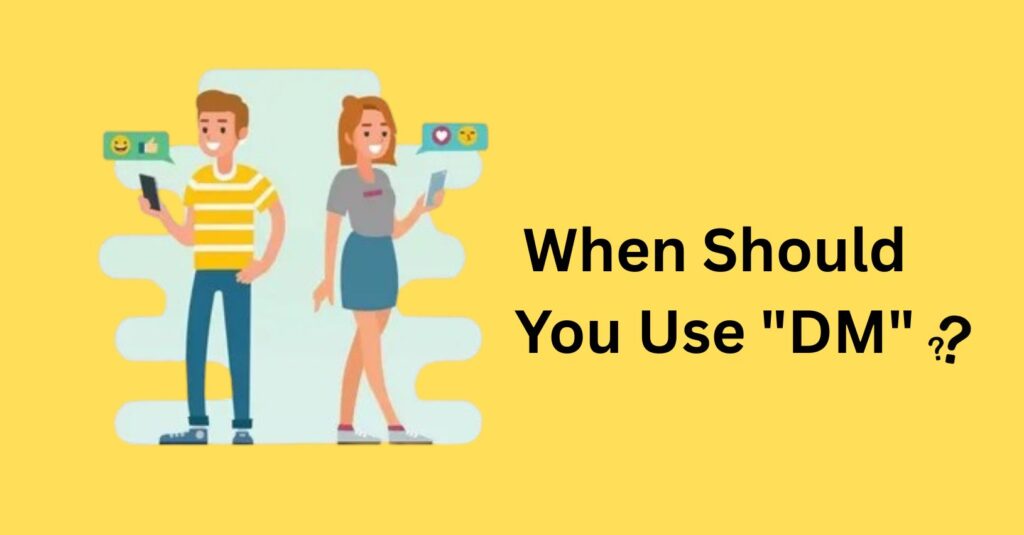
DM Mean Knowing when to use DMs versus public communication shows digital savvy and respect for context. Direct messages work best for sharing private information, handling sensitive conversations, or building deeper connections away from public view.
Use DMs when discussing personal details, coordinating privately, or addressing matters requiring confidentiality and discretion. The right moment to move conversations private depends on platform norms, relationship dynamics, and the nature of information being shared.
Social Media
DM Mean On platforms built around public sharing, DMs serve specific valuable purposes. Move conversations private when sharing sensitive details like phone numbers, addresses, or financial information. Following up on public comments about services or collaborations works perfectly through Instagram DMs or Twitter messages.
Building genuine connections requires depth that public threads can’t provide. Personal messaging lets relationships develop authentically. Handle sensitive topics, constructive criticism, or private matters away from public view, demonstrating emotional intelligence and respect for everyone involved in online communities.
Business Context
Professional settings demand discernment about when direct messages beat other channels. Use business messaging when customer support requires privacy-order numbers, account details, or payment issues need confidential handling. Discussing salary negotiations, performance feedback, or strategic planning demands professional correspondence.
Skip DMs for formal proposals, contracts, or legal discussions requiring documentation. Email creates necessary paper trails for important business matters. Understanding this distinction marks you as someone who grasps appropriate messaging across professional contexts and communication strategy.
Online Communities
Forums, Discord servers, Reddit communities, and niche platforms have distinct messaging norms. Direct messages work well for moderator communication about rules, concerns, or suggestions. Specialized help requests benefit from private outreach when community conversation reveals someone’s expertise.
Organizing offline meetups, sharing location details, or coordinating groups requires privacy and efficiency. Reporting harassment or addressing conflicts demands private conversation protecting everyone’s dignity. Different communities have different cultures-read the room before messaging members uninvited in digital communities.
How to Respond to a “DM Me” Request
Your response sets the tone for everything following. Best replies confirm receipt, set expectations, and match original message tone appropriately. “Absolutely! Sending you a message right now” sounds enthusiastic and immediate for casual contexts.
“Thank you for the invitation to continue privately. Message sent” maintains professional courtesy. “Will do! Give me 15 minutes to gather information” manages expectations when you need time. “You got it! Sliding into your DMs now ” works for friendly exchanges with personality.
Choosing the Best Phrase Based on Context
Audience
Your relationship with recipients determines your messaging approach completely. Close friends appreciate casual shorthand like “hit me up” built on trust and comfort. Professional contacts need elevated language maintaining appropriate boundaries while staying approachable.
Strangers require extra politeness giving them agency rather than demanding action. Authority figures deserve maximum formality showing respect for their time and position. Power dynamics matter-reaching up professionally means learning formally consistently.
Platform
Each platform has distinct communication cultures shaping what sounds natural versus awkward. Instagram and TikTok thrive on casual, emoji-laden friendliness. LinkedIn demands professional, purposeful language avoiding slang or excessive emojis undermining your professional brand.
Twitter/X allows quick, witty, sometimes sharp brevity. Facebook shows generational splits-younger users expect casualness while older demographics prefer formality. Discord and Reddit depend entirely on specific community expectations and norms.
| Platform | Tone | Best Phrase |
| Casual, friendly | “DM me! 😊” | |
| Professional | “Please message me privately” | |
| Twitter/X | Quick, direct | “DMs are open” |
| TikTok | Playful, relaxed | “Hit me up in DMs!” |
| Discord | Community-based | “Feel free to DM” |
Purpose of the Message
Why you’re requesting or responding to DMs should shape language choice significantly. Information sharing needs clear, transactional efficiency like “DM me for details”. Relationship building emphasizes connection over transaction with warmer invitations.
Problem-solving balances empathy with efficiency for customer support. Collaboration proposals sound partnership-oriented without stiffness. Romantic interest walks lines between confident and respectful. Match language warmth or formality to what you’re accomplishing.
Urgency
Response speed needs influence phrasing without demanding immediate attention aggressively. “Please DM as soon as possible-this is time-sensitive” conveys urgency explaining why. “When you get a chance, could you message me?” respects schedules moderately.
“Feel free to message whenever convenient” removes all pressure for non-urgent matters. “DM me this week if interested” sets soft deadlines staying respectful. Avoid “DM now” unless genuinely critical-even then, explain why urgency matters.
Common Mistakes to Avoid
Understanding pitfalls helps navigate private messaging without accidentally offending people or damaging relationships in digital spaces:
- Sending vague openers like “Hey” wastes time-lead with purpose
- Unsolicited sales pitches feel spammy and disrespectful
- Ignoring platform norms makes you look socially clueless
- Oversharing immediately overwhelms recipients before trust builds
- Following up aggressively within hours screams desperation
- Screenshotting without permission violates trust and privacy
- Using “DM me” without context sounds like spam
- Pressuring immediate responses shows entitlement and impatience
Understanding Platform-Specific DM Features
Different platforms offer unique DM capabilities affecting how you communicate. Instagram lets you share posts, reels, and disappearing photos within messages. LinkedIn distinguishes between InMail and connection messages affecting reach. Twitter/X has open DM settings versus followers-only options.
Facebook Messenger integrates video chat and cross-platform messaging with Instagram. TikTok and Snapchat lean toward younger audiences with creative content sharing. Understanding these technical differences helps you leverage each platform’s strengths for effective social media messaging.
DM Safety and Privacy Considerations
| Risk | Protection Strategy |
| Scams & Phishing | Verify account authenticity before responding |
| Unsolicited Messages | Adjust privacy settings to filter requests |
| Privacy Violations | Never share financial or personal data |
| Screenshot Sharing | Assume anything sent could become public |
| Harassment | Use block and report features immediately |
Protecting yourself in DMs requires vigilance about common scam patterns. Phishing attempts, fake brand accounts, and romance scams proliferate through direct messages. Control who can message you through privacy settings on each platform. Never share financial information, social security numbers, or passwords regardless of who asks.
The Evolution of DM Culture
DM Mean has transformed dramatically from 2020 to 2025. Early years saw mostly casual, friend-based usage with flirtatious undertones. 2023-2024 brought businesses heavily into DM spaces for sales and support. Now DM appears in resumes, interviews, and professional correspondence as mainstream language.
This evolution reflects broader shifts in how Americans work and communicate digitally. Remote teams rely on instant messaging replacing email for speed. Social-first communication dominates younger demographics completely. Understanding this trajectory helps you stay current with messaging etiquette expectations.
Frequently asked questions
What does DM mean in texting?
DM stands for Direct Message-private one-on-one conversation on social media platforms away from public view and comments.
Why do people DM instead of text?
DMs integrate into social platforms where conversations begin, making them faster and more convenient than exchanging phone numbers for SMS.
What does sliding into DM’s mean?
“Sliding into DMs” means initiating private conversation with someone, often implying romantic interest, though now used more broadly casually.
Is DM the same as a private message?
Yes, DM (Direct Message) and PM (Private Message) mean essentially the same-private conversation between individuals rather than public.
Conclusion
Mastering DM in texting requires context awareness, tone sensitivity, and platform knowledge transforming basic understanding into communication excellence. Whether using Instagram for social connection, LinkedIn for professional networking, or handling brand communication, choosing appropriate phrasing demonstrates digital sophistication.
Apply these alternatives thoughtfully, avoid common mistakes, and remember every private message either builds or damages relationships. Success in digital communication comes from treating direct messages with intentionality, respect, and strategic awareness across all platforms and contexts consistently throughout your online interactions.

Passionate about innovation and growth. Dedicated to managing, optimizing, and creating seamless experiences while supporting diverse content and users with professionalism and clarity every day.