DND stands for “Do Not Disturb,” a critical acronym shaping modern digital communication across all platforms today. This three-letter boundary marker tells people you’re temporarily unavailable. It’s not rejection-it’s protection. Understanding DND meaning in text requires recognizing it as legitimate communication etiquette in our hyperconnected world. Americans particularly use this phrase to establish healthy digital boundaries without extensive explanation needed.
When someone sends you DND, they’re communicating intentionally through chat status updates. This phrase appears everywhere-from Slack DND status to Teams status indicators to casual messaging apps. The phrase has become universal across workplace communication and personal texting alike. It signals temporary unavailability clearly and respectfully. People appreciate this direct approach instead of being ghosted silently.
Where Did DND Originate From?
- The phrase originated from physical hotel signs hanging on guest room doors for decades.
- Hotels used these “Do Not Disturb” placards to tell housekeeping not to enter.
- When smartphones emerged, digital devices replicated this concept perfectly for modern needs.
- Apple’s iPhone introduced built-in DND mode around 2012, revolutionizing digital communication fundamentally and permanently.
- Android devices followed suit, providing users similar functionality for managing notifications and user availability.
- This technological integration transformed DND from casual slang into infrastructure.
- By 2015, most professionals recognized DND meaning in text instantly.
- Today, it’s embedded in Slack worldwide.
- Today, it’s embedded in Teams worldwide.
- Today, it’s embedded in Discord worldwide.
- Today, it’s embedded in countless other communication platforms worldwide.
- This evolution shows how DND became a universal indicator of digital boundaries.
What Does It Mean When Someone Texts “DND”?
Understanding DND in text requires reading between lines carefully and thoughtfully. Surface-level meaning: they’re unavailable now. Deeper interpretation involves recognizing emotional and professional contexts simultaneously. Someone might need quiet time, face emotional overload, experience burnout, or focus intensely. Context matters enormously in digital communication.
Your colleague texting “DND-deadline pressure” differs from a friend saying “DND, rough day mentally.” Tone interpretation shapes how you respond appropriately. The first signals professional focus; the second indicates emotional boundaries. People appreciate when you recognize these distinctions. Considerate communication requires understanding what drives DND messages specifically.
More post: https://vitalscap.com/gtg-meaning/
| DND Context | What It Means | Response Time |
| Work deadline | Deep focus needed | After work hours |
| Mental health | Emotional protection | When ready |
| Sleep schedule | Rest priority | Morning check-in |
| Social event | Present engagement | Later that evening |
| Personal crisis | Support needed | Immediate follow-up |
How Tone Affects DND Meaning in Text?
Tone interpretation completely transforms DND meaning in text across different scenarios and relationships today. The same three letters communicate differently depending on context, punctuation, and surrounding language carefully. Professional tone suggests organized focus. Casual tone implies relaxed disconnection temporarily. Emotional context shifts everything significantly.
“DND-working” sounds neutral and businesslike. “DND lol” feels lighthearted and friendly. “DND, not okay” signals emotional struggle requiring support. Understanding these tone shifts prevents miscommunication in relationships. Audience awareness prevents relationship friction before it develops. Smart communicators adjust their language based on receiver and situation dynamically.
The Impact of Punctuation on DND Messages
The way you punctuate “DND” can dramatically change how your message is received by others. Adding an exclamation mark (DND!) may come across as aggressive or frustrated to some recipients. A simple period (DND.) maintains a neutral, matter-of-fact tone that’s less likely to offend. Using “DND” without any punctuation feels casual and friendly in most contexts. Understanding these subtle differences helps you communicate your boundaries without creating unnecessary tension.
Context Clues That Shape DND Interpretation
The surrounding words and emojis you pair with DND significantly influence how people perceive your availability. Saying “DND for now ” feels temporary and approachable compared to just “DND” alone. Adding context like “DND – studying for finals” helps others understand your reason and respect your space. Without context, recipients might wonder if they’ve done something wrong or if you’re upset. Providing brief explanations alongside DND creates clarity and maintains positive relationships.
Reading the Room When DND Feels Harsh
Certain situations make using “DND” feel more abrupt or cold than you might intend. Sending DND to a close friend or family member without explanation can seem dismissive of the relationship. In professional settings, using DND with supervisors or clients may appear unprofessional without proper context. Timing also matters-responding to someone’s urgent message with just “DND” can feel insensitive. Being aware of your audience and their expectations helps you adjust your approach appropriately.
Polite & Professional Alternatives to DND
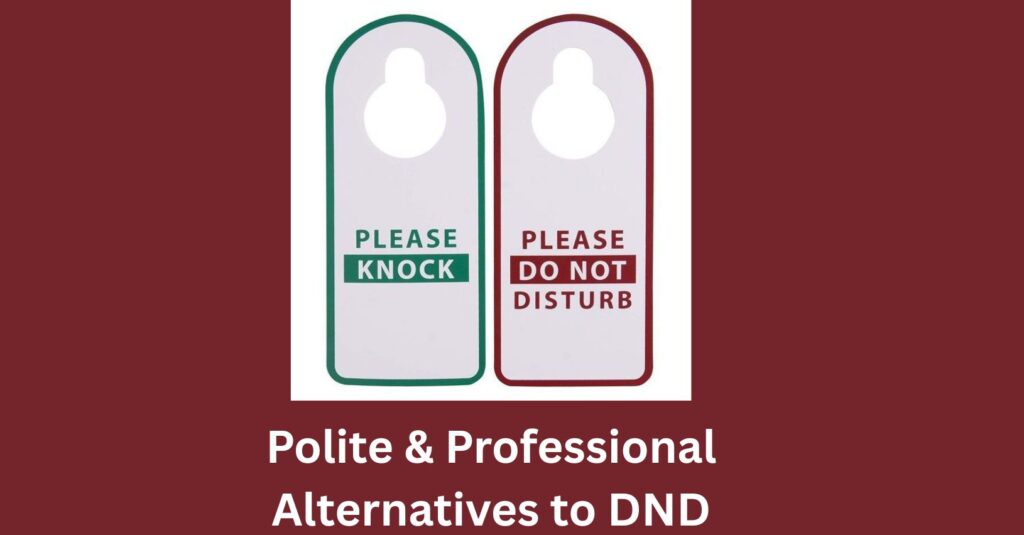
Professional communication standards sometimes require avoiding casual DND acronyms altogether in formal contexts. Corporate environments value polite alternatives showing communication competence clearly. “Currently focused on deliverables” sounds more polished than brief “DND.” Traditional industries appreciate this professional phrasing demonstrating attention to detail and standards.
“Offline for deep work until 3 PM” provides specificity that workplace professionalism demands. Business professionals recognize these alternatives as standard business communication standards globally. Adding timeframes removes uncertainty from your availability status. This approach builds trust-building language patterns in workplace communication etiquette systematically.
Softened Phrases for Personal Relationships
When communicating with friends and family, warmer alternatives to DND can preserve connection while setting boundaries. Phrases like “Need some quiet time, will catch up later!” convey the same message with added warmth. “Taking a break from my phone today” explains your unavailability without sounding dismissive. “In focus mode right now – talk soon?” acknowledges the person while stating your needs. These gentler approaches maintain relationship quality while still protecting your personal time and space.
Professional Out-of-Office Alternatives
In work environments, more formal alternatives to DND demonstrate professionalism and respect for colleagues. “Currently in deep work mode – will respond by end of day” sets clear expectations without seeming curt. “In back-to-back meetings until 3pm” provides specific information about your availability. “Working on a deadline – will get back to you shortly” acknowledges their message while explaining the delay. Using these professional alternatives shows consideration for your colleagues’ time and needs.
Creative Ways to Set Digital Boundaries
Beyond standard phrases, creative alternatives can make boundary-setting feel more personalized and less robotic. Status messages like “Phone on silent – living in the moment” communicate unavailability with personality. “Digital detox in progress” adds humor while clearly stating your intentions. “Currently unplugged-back online tomorrow!” gives a specific timeframe for your return. These unique approaches help you stand out while still effectively managing others’ expectations about your responsiveness.
Friendly & Casual Alternatives to DND
Casual texting guidelines allow much more relaxed language between friends naturally. “Phone’s on silent, catch you later!” maintains warmth while setting boundaries clearly. Exclamation marks soften formality here. Friends appreciate softening language that acknowledges their importance despite temporary absence. Considerate communication strengthens friendships through thoughtful polite phrasing regularly.
“Taking a breather-talk soon!” feels human and accessible. Friends understand personal space needs better than formal contacts might. Using emoji reinforces friendly tone-neutral alternatives preventing dismissive tone misinterpretation completely. This casual approach builds emotional intelligence in texting gradually over time and interactions.
Emotional & Mental Health Communication Ways
- Mental health communication has evolved significantly, making emotional well-being language crucial today.
- “Taking a mental health break” frames DND meaning in text as self-care rather than avoidance.
- This considerate communication approach builds understanding and support.
- Friends recognize emotional boundaries as healthy and necessary universally.
- “Overwhelmed now, need quiet” communicates honestly without shame
- Emotional context matters here significantly and personally.
- This phrasing removes stigma from emotional overload while protecting personal space needed.
- Empathetic responses from others follow when you’re transparent about emotional needs.
- Tone-sensitive replies emerge naturally when people understand your situation better.
- Emotional well-being language strengthens clarity in communication.
- Honest emotional indicators help prevent misunderstandings.
- Respecting emotional boundaries improves relationship communication overall.
When Should You Use DND Appropriately?
Understanding appropriate timing for DND meaning in text separates healthy boundaries in relationships from unhealthy avoidance patterns. Use it during focused work sessions requiring uninterrupted attention completely. Deep focus needs protection from notification interruptions and distractions persistently. Meeting status updates showing DND signal respect for attendees’ concentration necessarily.
Never use DND in text to avoid difficult conversations or emotional responsibility though. Ghosting differs fundamentally from temporary unavailability communication. Communication clarity requires honest framing always. Legitimate uses include sleep protection, event attendance, and genuine quiet time needs. Strategic availability status updates maintain relationship trust effectively and consistently.
How to Respond to Someone’s DND?
Responding maturely to DND messages demonstrates emotional intelligence in texting plainly. Simple acknowledgment suffices-thumbs-up emoji, brief “okay,” or “catch you later!” works perfectly. Don’t bombard with follow-up messages testing their boundary. That violates digital boundaries and digital space respect fundamentally.
One message shows respect beautifully.
If something’s genuinely urgent, send one message explaining importance clearly. Then wait patiently for their response. Communication best practices require honoring stated boundaries unless emergencies override them. This maturity builds trust-building language patterns in long-term relationships successfully. Your respect for their DND signals maturity and security undeniably.
7 Respectful Replies to DND Messages
Key respectful responses include:
- • “Got it! Take your time. Talk soon!” Shows warm acceptance without neediness.
- • “No problem. Reach out whenever!” Communicates security about the relationship.
- • “Your peace matters. See you later.” Validates their emotional needs positively.
- • “Thanks for letting me know.” Appreciates communication transparency directly.
- • “Focus on what matters. I’m here.” Affirms relationship permanence despite distance.
- • “All good! Enjoy your break.” Removes any guilt or pressure gracefully.
- • “Totally understand. Take care!” Normalizes boundaries in relationships completely.
Why Alternatives Matter in Communication?
Choosing polite alternatives to DND strengthens relationships through considerate communication significantly. Professional communication benefits enormously from varied phrasing showing tone awareness and sophistication. Emotional well-being improves when boundaries include warmth and explanation together. Communication etiquette standards in workplaces require thoughtful language choices consistently.
Tone interpretation shapes relationship trajectories powerfully over time. Brief acronyms sometimes seem cold without context accompanying them carefully. Adding one explanatory sentence transforms DND meaning in text from potentially dismissive into collaborative boundary-setting. This simple effort prevents communication friction before it damages relationships irreparably. Audience awareness guides these important language choices successfully.
Digital Etiquette Guidelines for DND
Professional standards require updating your status message when returning from DND meaning in text periods. Stale statuses confuse colleagues about your actual user availability today. Provide timeframes when possible-“DND until 6 PM”-removes uncertainty from your availability status completely. Specify urgency overrides: “If critical, email me” balances digital boundaries with professional responsibility.
Emojis add warmth to otherwise formal chat status updates successfully. or soften DND in casual contexts appropriately. Update across platforms-match Slack DND status with email settings. Consistency prevents conflicting availability status signals confusing people. This communication etiquette prevents frustration and strengthens workplace communication etiquette noticeably.
| Platform | DND Feature | Best For |
| iPhone/iPad | Focus Modes | Personal time management |
| Android | Do Not Disturb | Sleep schedules, focus blocks |
| Slack | DND Status | Team awareness |
| Microsoft Teams | Do Not Disturb | Professional boundaries |
| Discord | Do Not Disturb | Gaming/social protection |
What NOT to Say Instead of DND?
Phrases to absolutely avoid:
- • “Leave me alone” sounds harsh and accusatory.
- • “Don’t bother me” feels contemptuous and rejected.
- • “Stop messaging me” creates defensiveness immediately.
- • “I don’t want to talk” attacks the person directly.
DND mean These harsh alternatives damage relationships quickly and significantly. They prioritize your frustration over relationship preservation unfortunately. Dismissive tone avoidance requires choosing softening language that maintains connection despite boundaries. Using warm alternatives prevents weeks of awkward tension afterward.
Saying Do Not Disturb Without Using DND
Advanced communicators set boundaries in relationships without explicit acronyms sometimes elegantly. “I’m heads-down. Talk after 5?” conveys exactly what DND meaning in text does with added warmth significantly. Specificity appeals to American communication preferences strongly. “Need deep focus time today” frames boundaries as temporary and understandable completely.
Tone-neutral alternatives like “Silencing notifications for a bit” explain your boundary mechanism. “Taking quiet time tonight” normalizes personal space needs without negativity. These polite phrasing choices demonstrate emotional intelligence in texting while protecting your focus simultaneously. Communication best practices suggest this nuanced approach consistently across different relationships.
Frequently Asked Questions
What does DND stand for in texting?
DND stands for “Do Not Disturb” in texting. It signals someone is unavailable and requests no interruptions temporarily for work, rest, or personal reasons.
What does DND mean for girls?
DND means the same for everyone-“Do Not Disturb.” However, women may use it more for emotional boundaries or self-care, reflecting mental health communication needs.
What is DND when texting?
DND when texting is shorthand telling someone you’re unavailable and can’t engage in conversation right now. It sets digital boundaries respectfully and clearly.
How to use DND in a sentence?
“I’m going to DND for a few hours to finish this project-I’ll text you when I’m done!” or “Put my phone on DND last night-sorry I missed your message!”
Conclusion
DND meaning in text represents healthy digital boundaries in our overstimulated culture fundamentally. Americans mistake unavailability for rejection too often unfortunately. Understanding DND as protection rather than dismissal shifts entire perspectives positively. It models emotional well-being prioritization beautifully for everyone observing. Communication best practices include respecting others’ stated boundaries consistently and reliably.
Using DND thoughtfully, responding gracefully, and choosing softening language creates relationships built on mutual respect. This modern communication etiquette strengthens human connection despite digital distance necessarily. Master DND meaning in text today for healthier relationships tomorrow.

Passionate about innovation and growth. Dedicated to managing, optimizing, and creating seamless experiences while supporting diverse content and users with professionalism and clarity every day.