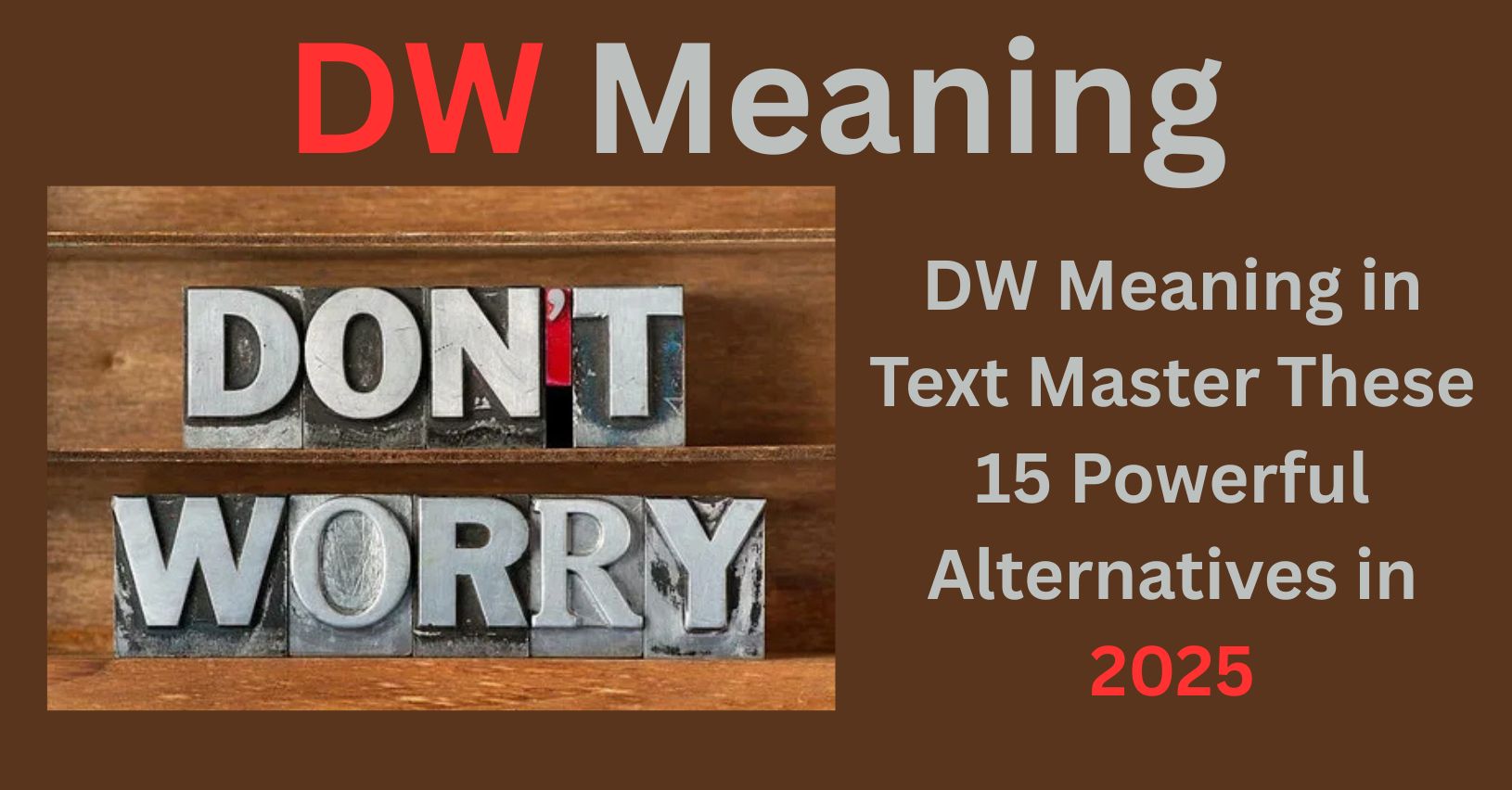
DW Meaning Ever sent “DW” and wondered if it landed wrong? You’re not alone. Digital communication in 2025 demands more than quick abbreviations. Whether you’re texting friends on Instagram or emailing colleagues, understanding what DW means in text transforms how people perceive you. This guide unpacks the DW abbreviation, explores its tone, and delivers 15 polite and professional alternatives that elevate every conversation.
What Does “DW” Mean in Text?
DW Meaning DW stands for “Don’t Worry” in texting and online chat slang. It’s a rapid-fire way to reassure someone or dismiss their concerns. Think of it as digital shorthand for “It’s okay” or “No problem.” The DW meaning in text emerged from the internet acronyms culture, where speed trumps formality.
Here’s a real scenario: Your friend texts, “Sorry I’m late!” You reply, “DW!” Simple, right? This messaging shorthand works beautifully in casual communication contexts. However, its brevity carries risks. Context matters enormously when deploying this texting abbreviation.
When and Where Is “DW” Used?
DW Meaning DW in chat thrives on specific platforms. You’ll spot it dominating text messages, WhatsApp conversations, Messenger threads, and Instagram DMs. Social media replies frequently feature this casual texting phrase, especially among younger demographics. Snapchat users pepper their snaps with it constantly.
However, avoid DW usage in professional email, business communication, or academic writing. Imagine sending your boss “DW” after missing a deadline. Disaster, right? The informal email between college friends is accepted, but workplace communication demands elevation.
More Post : Unlock SFS Meaning Master Text Slang 2025
| Platform | DW Acceptance Level | Best Practice |
| Text Messages | Very High | Use freely with friends |
| WhatsApp/Messenger | High | Context-dependent |
| Instagram DMs | High | Casual conversations only |
| Professional Email | Very Low | Never use |
| Slack/Teams | Medium | Know your company culture |
Tone and Nuance Behind “DW”
DW Meaning The tone in messages shifts dramatically with DW texting. Four primary interpretations exist. First, reassuring warmth: “DW! You’re totally fine!” with an exclamation conveys genuine comfort. Second, casual indifference: a plain “dw” might signal you’re busy or distracted.
Third comes the dismissive coldness: “DW.” with a period reads almost hostile. Finally, friendly comfort: “DW!! ” paired with emojis amplifies supportive messaging. Punctuation transforms everything in digital communication.
Consider these emotional tone variations:
- “DW!” = Enthusiastic reassurance
- “dw” = Casual, possibly rushed
- “DW.” = Cold, conversation-ending
- “DW “ = Warm, friendly comfort
15 Polite and Professional Alternatives to “DW.”
DW Meaning Why upgrade beyond DW? Your professional reputation in 2025 hinges on digital etiquette. Every text, every instant messaging exchange, shapes how others perceive your emotional intelligence. These 15 alternatives span the casual to formal spectrum, giving you precision tools for every situation.
Communication styles vary wildly. What works for comforting someone differs from workplace messaging. This framework helps you navigate conversation context with confidence. Each alternative carries distinct validating tone qualities that “Don’t Worry” alone cannot deliver.
1. “No Problem at All.”
DW Meaning This professional alternative to DW works everywhere. It’s the Swiss Army knife of reassurance phrases. Use it with clients, colleagues, or friends without worry. The phrase signals understanding while maintaining polish. “No problem at all” extends slightly more effort than DW, showing you care.
Example scenario: A coworker apologizes for rescheduling. You respond: “No problem at all. I completely understand these things happen.” Notice how it validates their concern while offering empathy? That’s emotional intelligence in action. This phrase builds trust in business communication contexts where brevity might seem curt.
2. “It’s All Good.”
“It’s All Good” radiates friendly tone and casual communication vibes. It’s perfect for text messages with buddies or social media replies where formality feels weird. This phrase emerged from 1990s slang but remains incredibly popular in 2025 texting.
Real example: Your friend texts, “Dude, I forgot your birthday yesterday!” You shoot back: “It’s all good! Don’t even think twice about it.” The laid-back energy diffuses tension instantly. This casual texting phrase works brilliantly in WhatsApp group chats, too.
3. “Please Don’t Worry About It.”
DW Meaning Adding “please” transforms politeness levels dramatically. This polite alternative to DW shows genuine care and respect. It’s perfect for empathetic tone situations where someone feels genuinely guilty or concerned. The extra word count demonstrates emotional investment.
Example: A neighbor apologizes for their dog barking late. You reply: “Please don’t worry about it. These things happen, and I know you’re doing your best.” Notice the supportive messaging element? You’re not just dismissing concern, you’re actively comforting someone.
4. “You’re Absolutely Fine.”
Validation hits different when explicit. “You’re Absolutely Fine” directly addresses the person’s emotional state. It’s more personal than DW, creating stronger reassurance. This phrase works for both casual conversation and workplace communication, depending on delivery.
Scenario: Your colleague worries they dominated the meeting. You respond: “You’re absolutely fine. Your input was valuable, and everyone appreciated it.” See how it combines validation with specific feedback? That’s advanced communication etiquette.
5. “That’s Totally Okay.”
Modern texting language loves “totally” as an intensifier. This phrase feels current, warm, and understanding. It’s especially effective for apology responses when someone’s late or missed something minor. The casual tone makes it approachable.
Example: A date texts, “So sorry, running 10 minutes behind!” You reply: “That’s totally okay! Take your time, no rush at all.” The phrase eliminates guilt while maintaining a friendly tone. Perfect for Instagram DMs or Messenger chats with people you’re getting to know.
6. “No Worries at All.”
This close cousin to DW offers more warmth through spelling it out. “No Worries at All” works beautifully in friendly workplace culture environments. It’s professional enough for Slack channels yet casual enough for weekend texts.
Real usage: A team member apologizes for a minor error. You respond: “No worries at all! Let’s just adjust and move forward.” Notice the solution-focused addition? That’s what separates good communication from great communication. You’re offering reassurance plus direction.
7. “It’s Not a Big Deal.”
Sometimes people catastrophize minor issues. “It’s Not a Big Deal” provides perspective and reassurance simultaneously. This phrase works when someone is apologizing excessively for something trivial. It reframes the situation constructively.
Example: Your roommate spills water on the counter. They panic: “Oh my god, I’m so sorry!” You calmly reply: “It’s not a big deal, really. I’ve done the same thing a hundred times.” The phrase plus personal anecdote builds empathy and connection.
8. “Completely Understandable.”
DW Meaning Professional excellence shines through “Completely Understandable.” This phrase screams emotional intelligence and maturity. It’s perfect for business communication, client relations, and any situation requiring a validating tone with polish.
Scenario: A client apologizes for requesting changes. You respond: “Completely understandable. Your vision is important, and we’re happy to adjust accordingly.” Notice how it transforms a potential friction point into rapport building? That’s an advanced communication strategy.
9. “All Is Well.”
Formal elegance meets reassurance in “All Is Well.” This phrase carries almost a poetic quality, making it perfect for written notes, thoughtful messages, or situations requiring gravitas. It’s more substantial than DW while remaining concise.
Example: A family member apologizes for missing a call during a busy day. You text: “All is well, no hard feelings whatsoever. Let’s catch up when you’re free.” The phrase creates emotional safety and signals mature understanding.
10. “You’re Good.”
Ultra-casual brevity defines “You’re Good.” This phrase sits just above DW in formality but offers more personal validation. It’s a Gen Z favorite for quick reassurance between close friends. Keep it for intimate social circles only.
Real example: Your best friend texts about anxiety, a joke they made. You reply: “You’re good! Don’t sweat it, everyone laughed.” The informality signals closeness and comfort. This wouldn’t work with your boss, but it’s perfect for peer communication.
11. “We’re All Good Here.”
Collective reassurance builds team cohesion. “We’re All Good Here” works brilliantly in group chats, project teams, or any collaborative setting. The plural “we” creates unity and shared understanding.
Scenario: Someone worries they held up a group project. You respond in the team chat: “We’re all good here! No worries on our end, we’re still on track.” Notice how it distributes reassurance across the entire team? That prevents one person from feeling singled out.
12. “No Harm Done.”
DW Meaning Forgiveness meets perspective in “No Harm Done.” This phrase acknowledges something went wrong while simultaneously absolving guilt. It’s perfect for mistakes that had potential consequences but ultimately didn’t cause damage.
Example: A colleague accidentally sent you the wrong file. They apologize profusely. You respond: “No harm done. We caught it early, so let’s just move forward with the correct version.” The phrase provides closure and direction simultaneously.
13. “Thanks for Letting Me Know.”
Gratitude transforms communication. “Thanks for Letting Me Know” shifts focus from the problem to the positive action of informing you. This professional alternative works incredibly well in business settings where you want to encourage transparent communication.
Scenario: An employee tells you they’ll be slightly late with a deliverable. You reply: “Thanks for letting me know. I appreciate the heads up, and the revised timeline works fine.” Notice how it reinforces positive behavior? You’re encouraging future open communication.
14. “It Happens to the Best of Us.”
Empathy reaches peak levels with “It Happens to the Best of Us.” This phrase normalizes mistakes and builds psychological safety. It’s perfect for mentorship, supportive messaging, or any context where someone feels inadequate.
Example: A junior colleague makes an error and spirals. You respond: “It happens to the best of us, seriously. I made the same mistake my first year, and I learned so much from it.” The personal anecdote addition amplifies connection and reassurance.
15. “Not a Worry in the World.”
DW Meaning Whimsical positivity radiates from “Not a Worry in the World.” This phrase injects personality and optimism into reassurance. It’s perfect for encouraging messages or situations where you want to lift someone’s spirits beyond simple comfort.
Example: A friend stresses about hosting a casual dinner party. You text: “Not a worry in the world! We’re just excited to hang out, pizza boxes and all.” The phrase creates lightness and perspective. It’s creative communication that stands out from generic responses.
How to Choose the Right Alternative to “DW”
DW Meaning Decision paralysis hits when you’ve got 15 options. Here’s your framework for choosing wisely. First, assess relationship dynamics. Are you texting your CEO or your college roommate? Formality requirements shift dramatically based on this single factor.
Second, evaluate urgency. Quick casual texting between errands? Maybe “You’re good” suffices. Important professional email? Go with “Completely understandable.” Third, consider emotional weight. Is someone genuinely distressed or just slightly apologetic? Heavy situations demand phrases like “It happens to the best of us.”
More post: Unlock SFS Meaning Master Text Slang 2025
| Situation | Best Alternative | Why It Works |
| Friend’s casual apology | “It’s all good.” | Maintains a friendly tone |
| Colleague’s mistake | “Completely understandable” | Professional validation |
| Client’s concern | “Thanks for letting me know.” | Encourages communication |
| Someone feeling guilty | “It happens to the best of us.” | Normalizes experience |
| Quick text reply | “You’re good.” | Efficient yet personal |
What NOT to Say in Place of “DW”
- Toxic alternatives destroy relationships faster than silence. “Whatever” tops the danger list. It screams dismissiveness and passive-aggression. Responding “Whatever” to someone’s apology signals you’re still angry and unwilling to move forward.
- “Fine.” with a period is a landmine. Everyone knows “fine” means the opposite in text communication. It’s the written equivalent of an eye roll. “It doesn’t matter” sounds emotionally cold, suggesting either the person or situation holds no value to you.
- Single-letter responses like “K” are conversation killers. They convey annoyance and unwillingness to engage. “If you say so” drips with doubt and disrespect. It questions the person’s judgment while pretending to agree.
- Overcorrection dangers exist, too. Responding with overly formal language to casual friends feels robotic. Imagine your bestie texts, “Sorry I’m late!” and you reply, “Your tardiness is of no consequence whatsoever.” Weird, right? Context matching matters enormously.
- Recovery strategies: If you’ve sent a toxic response, acknowledge it. Text: “Sorry, that came out wrong. I’m not upset at all, just distracted today.” Owning communication mistakes prevents relationship damage.
Phrases to delete from your vocabulary:
- “Whatever” (dismissive)
- “Fine.” (passive-aggressive)
- “It doesn’t matter” (cold)
- “K” (hostile brevity)
- “Sure” (sarcastic doubt)
- “If you say so” (questioning credibility)
Frequently Asked Questions
What does DW mean in texts?
DW stands for “Don’t Worry” in texting. It’s a casual abbreviation used to reassure someone or dismiss concerns quickly in informal digital conversations and social media platforms.
What does DW usually mean in texting?
DW typically means “Don’t Worry” in most texting contexts. It functions as a quick reassurance, though tone varies depending on punctuation, context, and relationship.
What does DW stand for?
DW stands for “Don’t Worry” in text messaging. While less common, it can also mean “Dear Wife” in specific contexts or “Doctor Who” among fans globally.
What does DW mean in Gen Z?
For Gen Z, DW means “Don’t Worry” but carries casual, sometimes dismissive undertones. They prefer it in rapid group chats rather than serious conversations.
Conclusion
Mastering what DW means in text and its polite and professional alternatives transforms your digital communication in 2025. Whether you’re navigating Instagram DMs, WhatsApp group chats, or professional emails, choosing words thoughtfully builds stronger connections. You’ve now got 15 powerful options spanning casual to formal contexts. Remember: it’s not just what you say but how you say it. Elevate your texting etiquette, show emotional intelligence, and watch relationships flourish through better word choices this year.

Passionate about innovation and growth. Dedicated to managing, optimizing, and creating seamless experiences while supporting diverse content and users with professionalism and clarity every day.