ISTG Mean The landscape of digital communication transforms at lightning speed, introducing fresh shorthand expressions that reshape how we connect online. Among the countless acronyms flooding our text messages and social media feeds in 2025, ISTG has emerged as one of the most frequently used yet widely misunderstood abbreviations.
Whether you’ve encountered it in group chats, spotted it across Instagram comments, or received it in a heated text exchange, understanding this popular acronym has become essential for navigating modern digital conversations. This definitive guide decodes everything surrounding ISTG meaning in texting, delivering clear explanations alongside practical insights you can apply immediately.
Beyond simply defining the acronym, we’ll explore the cultural context that made it popular, examine real-world usage scenarios across different platforms, and reveal the subtle risks that come with casual abbreviation use. Most importantly, you’ll discover 14 proven alternatives that help you communicate with greater clarity, maintain professionalism when situations demand it.
What Does “ISTG” Mean in Text?
ISTG Mean ISTG stands for “I swear to God” in digital communication. People use this four-letter acronym to emphasize truthfulness, express intense emotions, or add dramatic weight to their statements. The phrase originated during the early 2000s when character limits made brevity essential in text messaging.
ISTG meaning from a girl carries the same definition as ISTG meaning from a boy-it’s genuinely gender-neutral internet slang. The acronym appears across platforms like Snapchat, Instagram, TikTok, and traditional text messages. Understanding what ISTG means on Snapchat versus other platforms reveals consistent meaning but varying contextual usage patterns.
Examples of How “ISTG” is Used
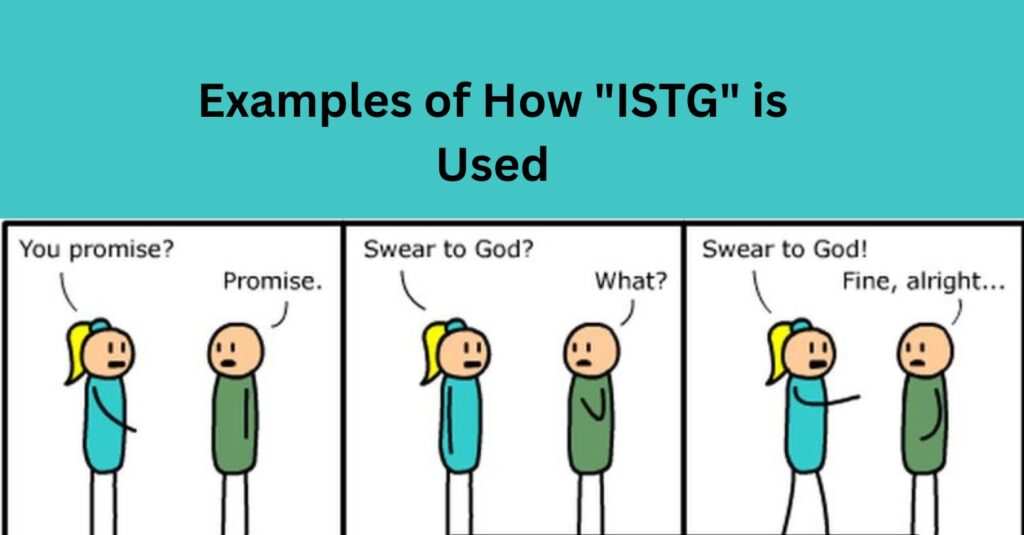
Real-world examples demonstrate how ISTG functions across different emotional contexts. When expressing sincerity, someone might text: “ISTG, I didn’t touch your phone.” This emphasizes truthfulness when being questioned or accused of something they didn’t do during conversations with friends or family members.
For frustration scenarios, you’ll encounter messages like: “ISTG, if he does that one more time…” The acronym amplifies annoyance and warns of potential consequences. “ISTG fr fr meaning in chat” doubles down on emphasis-essentially saying “I swear to God, for real, for real” to remove any doubt about statement authenticity.
More post: https://vitalscap.com/tysm-mean/
Common ISTG Usage Scenarios
| Context Type | Example Message | Emotional Tone |
| Truthfulness | “ISTG, I was home all night” | Defensive, sincere |
| Frustration | “ISTG this traffic is unbearable” | Annoyed, exasperated |
| Shock | “ISTG I can’t believe that happened” | Surprised, dramatic |
| Humor | “ISTG this is the best pizza ever” | Playful, exaggerated |
Why Understanding “ISTG” Matters
- ISTG Mean ISTG stands apart from harmless abbreviations like LOL or BRB due to its foundation in religious language
- The acronym invokes God as a witness to the truth of a statement, which carries significant weight
- Some individuals find ISTG uncomfortable or inappropriate based on their personal beliefs
- Religious backgrounds influence how people perceive and react to ISTG in conversations
- Cultural values across diverse American communities vary widely regarding religious invocations
- Professional workplace settings require elevated communication standards that exclude ISTG
- Employers consistently expect polished, professional language in all workplace correspondence
- Internet slang with religious undertones appears immature in professional contexts
- Using ISTG in work environments can actively damage your professional credibility
- The acronym has potential to alienate colleagues who hold different values or beliefs
- Career opportunities may be jeopardized by inappropriate use of casual religious language
- Professional environments universally reject casual religious invocations regardless of whether they’re abbreviated
Tone and Nuance The Underlying Meaning of “ISTG”
ISTG carries specific tonal markers that shape how recipients interpret your messages. The phrase operates as highly informal, emotionally reactive, and potentially risky depending on audience composition. Understanding these nuances prevents miscommunication and accidental offense in both personal and professional digital interactions with various demographic groups.
Best usage scenarios include casual conversations with close friends who share your communication style, social media captions targeting younger audiences, memes requiring exaggeration, and messages between peers familiar with current internet slang. Avoid ISTG when communicating with employers, educators, clients, or anyone whose religious views remain unknown to you personally.
Key Tone Indicators
- Emotional intensity: High-stakes feelings
- Informality level: Extremely casual
- Risk factor: Potential offense
- Age demographic: Primarily Gen Z usage
14 Best Alternatives to “ISTG” (With Tone & Context)

I promise you
This alternative works beautifully in formal situations requiring sincerity without slang. “I promise you” conveys commitment and builds trust in professional emails, business negotiations, and serious personal conversations. Example usage: “I promise you, I’ll complete the project by Friday.”
I’m being completely honest
ISTG Mean Perfect for clarifying intentions and defusing tense situations with transparency. This phrase signals openness while maintaining a professional tone across demographics. Use it when accused of dishonesty: “I’m being completely honest-this wasn’t my decision alone.”
No cap
Gen Z’s favorite ISTG substitute that means “no lie” in modern slang. “No cap” carries identical emphatic energy minus religious references. It dominates TikTok, Instagram, and youth-oriented platforms: “No cap, that was the best concert ever.”
Truthfully
Single-word alternative that instantly elevates communication maturity. “Truthfully” fits academic papers, professional correspondence, and serious discussions requiring measured responses. Example: “Truthfully, I don’t think that approach will work for our team.”
I swear
Maintains oath structure while removing “to God” component. Still informal but less likely to offend religious sensibilities. Use casually: “I swear, I didn’t know about the surprise party!”
Honestly
Perhaps the most universally acceptable alternative bridging casual and professional communication seamlessly. “Honestly” works across demographics, platforms, and relationship types without risking offense or appearing unprofessional in any context.
I’m telling the truth
Direct statement explicitly clarifying intent without dramatic flair. This alternative removes ambiguity when defending yourself or correcting misunderstandings: “I’m telling the truth-I saw everything that happened.”
I mean it
Adds weight to compliments, promises, or serious declarations. “I mean it” signals genuine intention beyond empty conversation: “You’re incredibly talented-I mean it.”
You have to believe me
Use when stakes are genuinely high and being believed matters tremendously. This phrase conveys urgency in critical situations: “You have to believe me, I wasn’t involved in that decision.”
That’s the honest truth
Particularly effective when recounting events or defending positions in storytelling contexts. Sounds conversational yet carries strong conviction: “That’s the honest truth-I witnessed it myself.”
Cross my heart
Childhood phrases maintain emotional resonance without adult slang’s sharp edges. Works wonderfully with close friends and family members: “Cross my heart, your secret is safe with me.”
In all seriousness
Perfect transitional phrase shifting conversations from humor to genuine points. Use it for tonal pivots: “In all seriousness, I really appreciate your support during difficult times.”
I wouldn’t lie to you
Reinforces existing trust bonds in established relationships. Best with people who already know your character well: “I wouldn’t lie to you-that’s exactly what happened.”
For real
ISTG Mean Abbreviated as “fr”, this alternative pervades 2025 digital communication. Urban, relaxed, and widely understood across demographics: “For real, I never expected that plot twist!”
How to Choose the Right Alternative Based on Context
- Audience-Based Language Selection
- “Selecting appropriate alternatives requires analyzing who receives your message carefully. Texting your best friend allows “no cap” or “for real” naturally. Emailing potential employers demands “I promise you” or “truthfully” to demonstrate professionalism and maturity in communication skills.”
- Factors to Consider When Choosing Alternatives
- “Consider recipient age, cultural background, relationship proximity, and communication preferences before choosing alternatives. Boomer bosses won’t appreciate Gen Z slang terminology. Teenagers disconnect from overly formal corporate language patterns. Match your word choice to audience expectations and comfort levels.”
Intent and Emotion
What emotion are you actually trying to convey through digital messages? Defending yourself requires “I’m telling the truth” or “you have to believe me” for credibility. Expressing excitement works better with “no cap” or “for real” maintaining energy levels appropriately.Making promises calls for “I promise you” or “you have my word” building trust foundations. Showing frustration benefits from “honestly” or “in all seriousness” without escalating tensions unnecessarily.
Medium of Communication
Platform context shapes language appropriateness significantly across digital channels. Emails demand professional alternatives like “truthfully” or “I’m being completely honest” maintaining workplace standards. Text messages offer more flexibility based on recipient relationships and established communication patterns between individuals.
Social media platforms like TikTok and Instagram welcome casual alternatives including “no cap” or “fr” fitting youth culture expectations.
Cultural Sensitivity
Religious and cultural backgrounds influence how people receive certain phrases profoundly. “I swear to God” might offend individuals whose faith prohibits casual oaths or divine name invocation. Even abbreviated as ISTG, religious references persist underneath surface meanings clearly.When uncertain about someone’s background, default to neutral alternatives consistently.
Polite and Professional Alternatives to ISTG (Expanded Discussion)
Corporate environments, academic institutions, and client-facing roles require language building credibility rather than undermining professional reputations. “To be completely transparent” opens honest dialogue while signaling maturity in business contexts. Use this when discussing challenges, mistakes, or sensitive topics with colleagues, supervisors, or external stakeholders.
“You have my word” carries traditional weight in business negotiations, client communications, and situations where commitment matters tremendously. “Let me assure you” projects confidence and competence particularly effectively in customer service scenarios. These expressions convey earnestness without risking offense or appearing unprofessional in any workplace situation.
Professional Communication Guidelines
| Situation Type | Recommended Phrase | Why It Works |
| Business emails | “I can confirm…” | Formal, factual |
| Client meetings | “You have my word” | Builds trust |
| Academic papers | “Truthfully…” | Scholarly tone |
| Job interviews | “I promise you…” | Professional sincerity |
Casual Alternatives for Friendly Texts or Chats
Casual environments invite relaxed language reflecting authentic personality without professional constraints. “Dead serious” emphasizes you’re not joking while keeping things light and conversational. “Not even kidding” underscores truthfulness through negative construction adding natural emphasis to statements made between close friends.
“No lie” originated in hip-hop culture and spread throughout American vernacular widely. “Fr” (short for “for real”) represents ultra-casual abbreviation becoming nearly ubiquitous in 2025 digital communication. Each maintains ISTG’s emotional weight while sidestepping sensitivity concerns entirely.
When Not to Use “ISTG”
Job interviews and resumes absolutely prohibit internet slang usage completely. Your application materials should showcase polished communication skills demonstrating professional readiness. ISTG screams immaturity and poor judgment to hiring managers evaluating candidates for positions requiring customer interaction or team communication.
Academic writing demands scholarly language without exception. Professors expect elevated expression in essays, dissertations, and research papers regardless of informality elsewhere. Public speaking contexts require credible language unless directly quoting others or analyzing digital communication trends as research subjects. Using ISTG inappropriately undermines credibility, damages professional relationships, or alienates important contacts permanently.
Understanding Digital Slang Evolution

- Internet slang undergoes constant transformation as new generations adopt and adapt existing phrases
- ISTG originally emerged from early 2000s texting driven by character-limit necessity
- The acronym has evolved beyond its practical origins into a mainstream expression
- Tracking changes in phrases like ISTG helps communicators stay current with language evolution
- Understanding definition context changes is essential for effective digital communication
- ISTG continues to dominate across multiple platforms throughout 2025
- New variations of the acronym emerge regularly in online spaces
- Staying informed about alternative meanings prevents potential miscommunication
- Awareness of contextual shifts in abbreviation usage is increasingly important
- Modern digital literacy includes understanding the nuances of common abbreviations
- Recognizing emotional undertones in internet slang has become a critical communication skill
- Selecting audience-appropriate language across diverse communication channels is now essential
Responding to ISTG in Conversations
When someone texts ISTG, appropriate responses acknowledge their emphasis without necessarily matching intensity. Reply with “Seriously?!” or “I believe you” to validate their statement. “That’s wild!” works for shocking revelations while “OMG, really?” expresses shared surprise effectively.
Follow-up questions demonstrate engagement: “What happened next?” or “How did you react?” These responses build conversation naturally while respecting the emotional weight behind their original ISTG usage without judgment or dismissal.
Frequently asked questions
What does ISTG 😭 mean?
ISTG paired with crying emoji expresses overwhelming emotion-typically dramatic exaggeration rather than genuine distress, commonly appearing in reactions to shocking or relatable content.
What does ISTG mean in texting?
ISTG means “I swear to God” in texting, used to emphasize truthfulness, express frustration, or add dramatic weight to statements across messaging platforms.
What does isHG mean in text?
This appears to be a typo for ISTG-double-check spelling as “isHG” doesn’t carry recognized meaning in internet slang dictionaries.
What does “isagt” mean in text?
Another likely typo or autocorrect error. “Isagt” isn’t standard slang-the sender probably intended ISTG but experienced keyboard mishap or autocorrect interference.
Conclusion
ISTG saturates digital communication in 2025 because it’s quick, emphatic, and emotionally resonant across demographics. However, effectiveness requires wisdom about when, where, and with whom you deploy this powerful acronym. Understanding ISTG meaning in chat empowers authentic communication while respecting audience boundaries and professional standards.
The alternatives explored give you options for every context imaginable. From “I promise you” in business emails to “no cap” in group chats, you’ve got linguistic tools expressing sincerity without causing offense. Thoughtful communication demonstrates emotional intelligence and respect qualities strengthening relationships and helping navigate our increasingly digital world successfully.

Passionate about innovation and growth. Dedicated to managing, optimizing, and creating seamless experiences while supporting diverse content and users with professionalism and clarity every day.