S/U meaning Ever received “S/U” in a message and felt completely lost? You’re scrolling through Instagram, someone comments “S/U,” and suddenly you’re questioning your digital fluency. This abbreviation confuses countless people daily across social media platforms and text messaging. Don’t worry-understanding S/U meaning isn’t rocket science, but it does require knowing context, platform, and sender intent.
The world of digital communication moves fast. What worked yesterday might confuse someone today. Texting abbreviations 2025 continue evolving, and S/U sits right at the center of this linguistic revolution. Whether you’re navigating Instagram Stories, responding to Snapchat notifications, or simply keeping up with friends, mastering this abbreviation transforms confusion into confidence. Let’s decode this mystery together and explore how S/U in text shapes modern online chatting and social media interactions.
What Does S/U Mean in Text?
| Category | Information |
| Primary Meaning | “Swipe Up” in modern digital communication |
| Platform Origins | Snapchat and Instagram |
| Feature Type | Interactive stories with clickable links |
| Example Usage | Influencer showcases a product, adds text saying “S/U for discount!” – signal to interact |
| Time Period | Became essential around 2018-2019 |
| Popularized By | Content creators and brands |
| Purpose | Drive massive audience engagement |
| Function | Powerful call-to-action for content sharing and promotional messages |
| Platform Update | Instagram replaced traditional swipe-up features with link stickers in late 2021 |
| Current Status | People still use “S/U” constantly because habits stick strongly in evolving online slang |
Alternative Interpretations of S/U
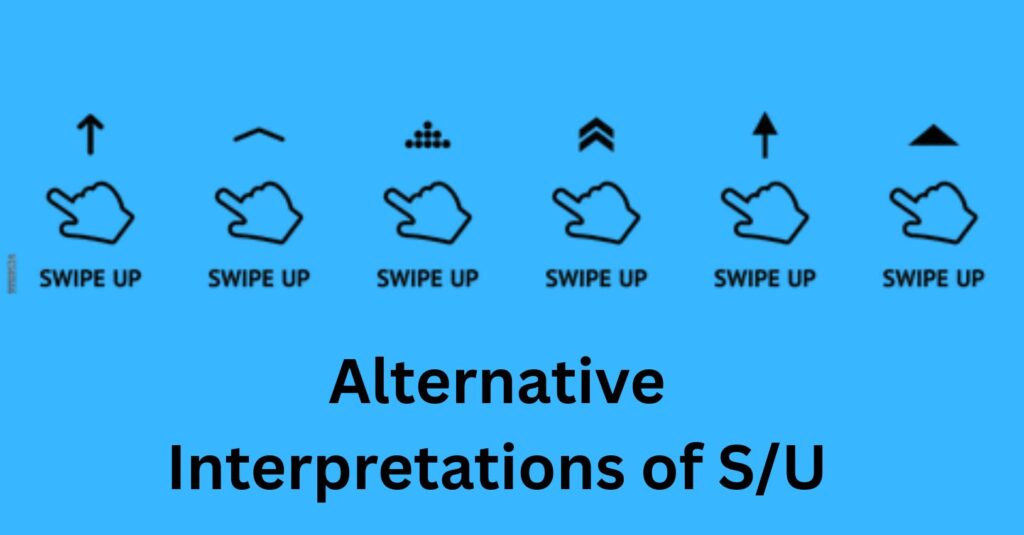
S/U Meaning While “Swipe Up” dominates social media stories, the S/U abbreviation carries multiple meanings depending on contextual meaning and platform. Digital politeness requires understanding these variations for proper tone sensitivity. Sign Up appears frequently in email marketing and newsletter subscriptions-“S/U to get early access!” means registering for something through business communication channels.
Shut Up serves as playful banter during casual tone conversations among friends. “Omg s/u no way!! ” isn’t aggressive-it’s friendly teasing. The playful tone typically includes emojis and exclamation points for intention detection. Status Update dominates professional correspondence on platforms like Slack-“S/U on the project?” translates to requesting progress information in business communication and professional tone messages within teams.
| S/U Meaning | Common Platform | Context Type | Example Usage |
| Swipe Up | Instagram, Snapchat | Social Media | “New video-S/U to watch!” |
| Sign Up | Email, Websites | Marketing | “S/U for early access!” |
| Shut Up | Text Messages | Casual Chat | “S/U that’s hilarious “ |
| Status Update | Slack, Teams | Professional | “S/U on deliverables?” |
How to Respond to “S/U” Messages
S/U Meaning Responding appropriately shows communication clarity and conversational awareness across different digital platforms. Your reply should match sender intent, relationship level, and platform expectations for proper tone adjustment. For social media links, when creators say “S/U for more details,” engaging shows support and audience participation-reply with “Just checked it out-this is amazing! ” or “Swiped up and grabbed a discount!”
For friend check-ins where someone texts “S/U?” they’re asking what’s happening in your life right now. Respond casually, maintaining a friendly tone-“Not much! Just finished that series you recommended ” Keep it breezy and match their energy level. When colleagues request status updates through “S/U on deliverables?” respond clearly using professional alternatives-“We’re 75% complete with final review scheduled for Thursday” demonstrates workplace communication etiquette effectively.
More Post : https://vitalscap.com/dm-mean/
Understanding the Context of S/U Requests
When you receive an “S/U” message, the first step is determining what the sender actually wants from you. Social media platforms use this prompt differently, so context matters significantly in your response. Consider whether it’s a promotional link, personal content share, or casual invitation before reacting. Your response should align with both the platform norms and your relationship with the sender.
Crafting Appropriate Responses Based on Sender Intent
Different situations call for different response styles when someone sends you “S/U” in a message. Professional contacts might expect a more formal acknowledgment, while close friends appreciate casual replies. Evaluate whether the sender wants engagement, feedback, or simply awareness of their shared content. Matching your response tone to their intent creates better communication flow and mutual understanding.
Managing Unwanted or Spam S/U Requests
Not every “S/U” message deserves your attention, especially when dealing with spam or irrelevant promotional content. Setting boundaries is essential for maintaining healthy digital communication habits without feeling obligated to respond. You can politely ignore, use platform features to mute or block persistent senders, or send a brief decline. Protecting your time and attention online is perfectly acceptable and often necessary for well-being.
Polite, Professional & Casual Alternatives to “S/U”
Sometimes you’ll want to avoid the S/U abbreviation entirely-especially in formal writing or professional correspondence requiring communication clarity. Business emails and customer interaction demand precision through professional tone language. Try “Please follow the link below for complete details” for email marketing and online branding messages requiring business communication standards.
Casual alternatives work better for texting friends or posting to engaged followers on social media platforms. “Check this out ” remains simple, direct, and universally understood across messaging apps and online chatting contexts. “Tap here if you’re curious” creates conversational invitations for user interaction and content sharing. For social media trends 2025 and influencer content strategies, try trendy phrases like “Unlock more info here ” or “Wanna see more? Tap the link ” for prompting engagement.
Platform-Specific Language Guidelines
- LinkedIn: “Please see the link for full opportunity details” (Always formal)
- Snapchat: “S/U! You won’t regret it ” (Casual works perfectly)
- Email: “Kindly find the resource linked below” (Maintains respect)
- TikTok: “Link’s in bio-check it NOW ” (High energy)
- Slack: “Here’s the doc-review when possible” (Professional but relaxed)
Professional Alternatives for Business Communication
In professional settings, “S/U” feels too casual and might confuse colleagues or clients unfamiliar with internet slang. Consider using clear phrases like “Check the link in my profile” or “Visit the resource I’ve shared” instead. These alternatives maintain professionalism while still directing people to your content or resources effectively. Business communication benefits from clarity and directness rather than trendy abbreviations that may not translate across generations.
Polite Variations for General Audience Engagement
S/U Meaning When addressing a broad or mixed audience, politeness and clarity should guide your language choices over trendy shortcuts. Phrases like “Please see my story for details” or “Tap the link above for more information” work universally well. These alternatives show respect for your audience’s time while avoiding confusion for those unfamiliar with social media terminology. Maintaining approachability without sacrificing professionalism helps you connect with diverse follower groups effectively.
Casual Expressions for Friends and Close Followers
Among friends and regular followers who understand internet culture, you have more flexibility with how you phrase your calls-to-action. Creative alternatives like “Link’s up!” or “Check this out!” maintain the casual vibe while feeling fresh and personalized. You can also use emojis like or combined with short phrases to create visual interest. Keeping your language authentic to your personal style helps maintain genuine connections with your closest online community.
Understanding Context and Platform Differences
- Platform matters enormously for proper tone adjustment and contextual meaning interpretation in digital communication
- What works on TikTok bombs spectacularly on LinkedIn because each digital platform carries different expectations for communication style and audience context
- Snapchat encourages casual, spontaneous messaging while email marketing demands structured, professional language
- Email marketing requires structured, professional language for business announcements and customer interaction scenarios
- Think about your audience awareness constantly before hitting send on any message
- What resonates with Gen Z followers might confuse Baby Boomers completely because generational gaps create different expectations
- Understanding your demographic transforms good communication into exceptional communication
- Demographic understanding builds trust and brand engagement effectively
- Emoji usage adds another critical layer to digital communication
- feels friendly and approachable in messaging contexts
- signals humor and lightheartedness in conversations
- immediately professionalizes any message requiring respectful messaging
- Different digital platforms carry different expectations for communication style
- Audience context determines the success or failure of your messaging approach
- Generational gaps create different expectations that must be considered in communication strategy
When NOT to Use “S/U”
Abbreviation decoding matters, but knowing when to avoid abbreviations matters significantly more for maintaining digital etiquette standards. Certain contexts demand full phrases and polite communication over texting shorthand to prevent serious misunderstanding issues. Job applications represent the ultimate never-use zone-imagine writing “S/U for my portfolio!” in a cover letter where employers expect formal writing and professional correspondence.
Academic submissions require clarity and professionalism that abbreviations destroy completely. “S/U to view my sources” fails spectacularly in research papers or academic emails requiring communication clarity. Legal documents, contracts, agreements, and official communications need zero ambiguity for proper intention detection. First contact with professionals, client-facing communication, and sensitive topics all demand respect through complete sentences showing proper communication etiquette and audience context understanding.
Social Media Strategy and Engagement
Content creators and businesses leverage S/U strategically for maximizing audience reach and follower engagement across social platform features. Understanding influencer marketing tactics helps regular users navigate social media trends 2025 more effectively. Instagram Stories, TikTok videos, and Snapchat posts all employ this call-to-action for driving traffic toward external content, promotional messages, and brand engagement opportunities.
Influencer content strategies rely heavily on prompting engagement through strategic abbreviation placement in story promotions and influencer shoutouts. The best content promotion balances frequency with authenticity-overusing “S/U” dilutes effectiveness while strategic placement maximizes user interaction and content sharing. Digital marketing professionals analyze audience participation metrics constantly, adjusting marketing phrases and call-to-action language based on performance data from online engagement and audience reach statistics.
Effective Social Media Tactics
- Use S/U sparingly for maximum impact on follower engagement
- Combine with compelling visuals for better audience participation
- Track metrics to understand what drives online engagement best
- Test different marketing phrases across social media platforms
- Maintain authenticity while encouraging action from followers
Frequently asked questions
What is s/u in text?
S/U primarily means “Swipe Up” in text messaging and social media contexts, prompting users to access linked content through interactive stories or posts on platforms.
What is s/u?
S/U stands for multiple things: “Swipe Up,” “Sign Up,” “Shut Up,” or “Status Update”-interpretation depends entirely on conversational context, platform, and sender relationship dynamics.
What is s/u on Snapchat?
On Snapchat, S/U means “Swipe Up,” encouraging viewers to swipe upward on stories to access external links, direct messages, or additional content shared by creators.
What does the U mean in texting?
In S/U, the “U” typically represents “Up” (as in Swipe Up) but varies with context-it could mean “Up” in other interpretations like Status Update.
Conclusion
Understanding S/U meaning transforms digital communication from confusing to confident across all social media platforms and messaging apps. Whether it means Swipe Up on Instagram Stories, Sign Up for newsletters, or Status Update in Slack, context guides interpretation effectively. Remember: tone sensitivity, audience awareness, and platform expectations matter enormously for successful online engagement. Match sender energy, choose professional alternatives for formal writing, embrace casual tone with friends, and maintain communication clarity always for avoiding misunderstanding permanently.

Passionate about innovation and growth. Dedicated to managing, optimizing, and creating seamless experiences while supporting diverse content and users with professionalism and clarity every day.