WTH Meaning Ever received a text that made you pause and think, “Wait… what does that mean?” You’re scrolling through messages and suddenly see WTH pop up. Your friend’s confused. Your coworker sounds annoyed. WTH meaning carries emotional weight that changes based on context.
Understanding when it works-and when it bombs-separates smooth communicators from those who accidentally offend their boss. This guide reveals everything about WTH usage, interpretation, and smarter alternatives for 2025 and beyond.
What WTH Actually Stands For?
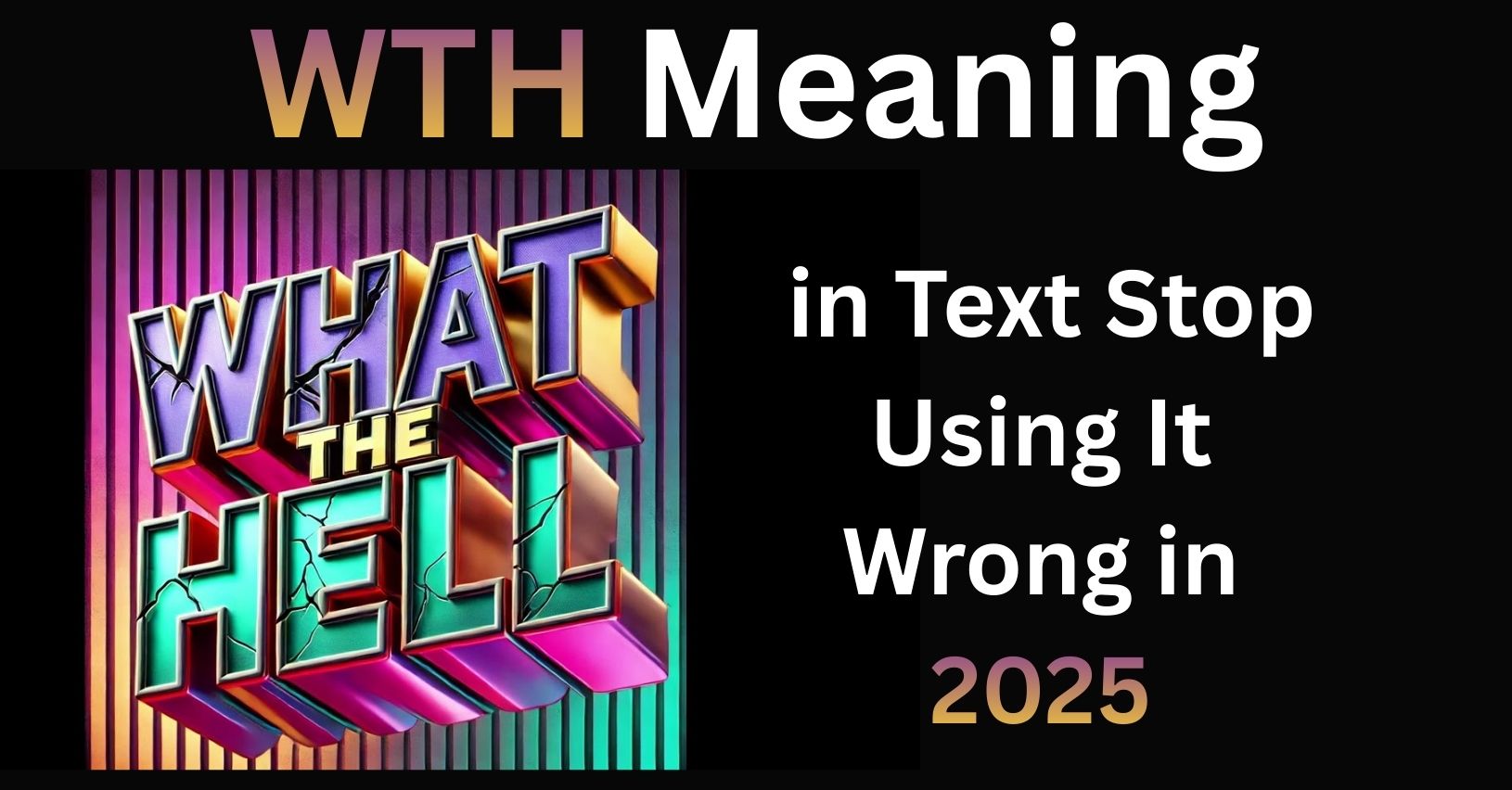
WTH stands for “What The Heck” or “What The Hell” depending on who’s typing. It’s digital shorthand for expressing surprise, disbelief, confusion, or frustration. Think of it as a toned-down version of stronger expletives-casual enough for most texting situations.
The phrase captures that moment when something catches you off-guard. Your friend shares unexpected news. A coworker sends a bizarre email. Your favorite show ends on a cliffhanger. WTH becomes your instant reaction, compressed into three letters for lightning-fast typing.
WTH Meaning Across Different Contexts
WTH meaning from a Girl often expresses genuine surprise rather than anger. Female texters frequently use it when sharing gossip, reacting to drama, or responding to unexpected plot twists. “He did WTH?!” signals disbelief mixed with curiosity for more details.
WTH meaning in work scenarios gets tricky fast. Professional settings demand careful language choices. Using WTH in a Teams message to your manager communicates unprofessionalism-even if the server just crashed. Workplace communication phrases require more polish and less emotional rawness than casual texting slang.
Is WTH Considered Rude or Offensive?
WTH Meaning Is WTH a bad word? Not technically-but context makes all the difference. Your grandmother might clutch her pearls while your gaming buddies wouldn’t blink. WTH sits in that gray zone between perfectly acceptable and potentially problematic language.
Professional environments treat WTH skeptically. It hints at mild profanity in texting without crossing into truly offensive territory. Still, hiring managers and supervisors prefer neutral expressions. Your professional reputation suffers when casual slang infiltrates business communications-even seemingly harmless abbreviations.
More post: Stop Misusing IMK Meaning Text, Alternatives & Essential Examples 2025
Okay to Use WTH When
WTH Meaning Casual texting slang thrives in relaxed environments. Use WTH freely when chatting with close friends about surprising news or bizarre situations. Group chats with trusted peers welcome this shorthand. Social media slang on platforms like TikTok or Instagram comments fits naturally.
Memes and trending slang culture embraces WTH enthusiastically. Your personal blog with conversational voice? Go ahead. Private Discord servers with gaming friends? Absolutely appropriate. Digital culture spaces built on informal communication don’t blink at abbreviations.
Avoid WTH When
WTH Meaning Professional communication demands elevated language choices. Never use WTH in emails to supervisors, client correspondence, or LinkedIn posts. Business communication dos and don’ts place abbreviations like WTH firmly in the “don’t” category for workplace settings.
Customer-facing writing requires polite phrasing always. Customer service interactions, formal proposals, academic papers, and job applications must avoid casual slang entirely. Content creator communication tips emphasize knowing your audience-and corporate audiences expect professionalism.
Tone Matters How WTH Comes Across?
WTH carries multiple emotional flavors depending on context and delivery. Recognizing these tonal variations helps you interpret incoming messages and choose appropriate responses. Let’s examine how WTH shifts meaning across different emotional states.
| Tone Type | How WTH Feels | Example Usage |
| Shocked | Surprised, stunned | “WTH! Did they really announce that?!” |
| Annoyed | Mildly irritated | “WTH is wrong with this printer?” |
| Confused | Puzzled, uncertain | “WTH does this error message mean?” |
| Amused | Light sarcasm | “WTH did I just laugh at?! “ |
| Disapproving | Critical judgment | “WTH are you wearing tonight?” |
WTH Meaning Expressions of confusion and frustration blend together in WTH’s emotional palette. Distinguishing between playful bewilderment and genuine annoyance requires reading surrounding context clues. Emoji additions provide crucial tonal guidance that bare WTH lacks.
Why You Might Want Alternatives to “WTH”?
- Polite alternatives to WTH serve multiple strategic purposes beyond simple courtesy. Your professional credibility improves dramatically when you master context-appropriate expressions. Career advancement often hinges on communication skills that many people overlook.
- Professional alternatives to WTH demonstrate emotional intelligence and vocabulary range. Employers value team members who express frustration constructively rather than reacting with casual slang. Content creator communication tips emphasize building trustworthy personal brands through consistent, appropriate language choices.
- Email deliverability sometimes suffers when messages contain slang or abbreviation-heavy text. Spam filters occasionally flag casual language patterns. Business communication best practices suggest avoiding anything that might trigger automated screening systems.
- Platform algorithms on LinkedIn, professional forums, and corporate networks sometimes downrank posts containing casual slang. Neutral expressions for disbelief perform better in searchable content. Your social platform communication reaches wider audiences when you choose universally appropriate phrasing.
Understanding WFH vs WTH
WTH Meaning WFH meaning in chat often gets confused with WTH by newer texters. WFH stands for “Work From Home”-a completely different phrase that gained massive popularity during 2020 pandemic shifts. Don’t mix these up in professional contexts.
“I’m WFH tomorrow” means you’re working remotely. “WTH is happening tomorrow?” expresses confusion. One communicates logistics while the other signals emotional reaction. Context usually clarifies which abbreviation someone means, but verification prevents embarrassing misunderstandings.
15 Polite,Professional Alternatives to “WTH”
Polite expressions for shock provide better options across contexts. These alternatives let you express genuine surprise without risking professional damage or offending sensitive readers. Respectful alternatives to slang demonstrate communication maturity.
Professional Tier Alternatives
1. “What on earth?” This classic phrase works beautifully in workplace emails and client calls. It conveys genuine surprise while maintaining complete professionalism. “What on earth caused this data discrepancy?” sounds curious rather than accusatory.
2. “What in the world?” Slightly more expressive than “earth” versions, but equally office-appropriate. Use it when expressing confusion to supervisors: “What in the world prompted this policy change?” The phrase balances emotion with politeness perfectly.
3. “That’s unexpected.” Neutral and diplomatic, this alternative suits delicate situations beautifully. When clients share surprising news, “That’s unexpected-tell me more” maintains professional composure. Customer service phrasing relies heavily on such graceful expressions.
4. “What’s happening here?” Direct without accusation, this question invites explanation. Team meetings benefit from this problem-solving approach: “What’s happening here with our timeline?” It focuses on resolution rather than blame.
5. “How did that happen?” Genuine curiosity shines through this alternative. “How did that happen? We submitted everything Thursday” encourages dialogue. Workplace communication phrases like this prevent defensive reactions while gathering information.
Casual Tier Alternatives
6. “Seriously?” Universal across contexts, this single word packs emotional punch. Friends appreciate its brevity: “Seriously? He proposed already?!” The question mark softens potential harshness while expressing disbelief.
7. “Wait, what?” Comedy gold for friend groups, this phrase captures double-take moments perfectly. “Wait, what? You adopted three cats?!” Social media posts featuring this reaction generate high engagement through relatable surprise.
8. “I can’t believe this.” Dramatic without aggression, it enhances storytelling naturally. “I can’t believe this actually worked!” shares joy and surprise simultaneously. Casual online conversations embrace this authentic expression enthusiastically.
9. “Excuse me?” Polite confrontation with Southern charm, it questions without attacking. “Excuse me? You said what now?” requests clarification while signaling disbelief. Tone types matter here-delivery determines whether it lands playfully or seriously.
10. “I wasn’t ready for that.” Vulnerable admission that connects emotionally. “I wasn’t ready for that ending! Total plot twist!” works brilliantly for entertainment discussions. Humorous expressions for surprise often incorporate personal unpreparedness.
Humorous Tier Alternatives
11. “This is… something.” Sarcasm drips from this understated reaction. “Well, this is… something special” implies speechlessness diplomatically. Office banter accepts this gentle mockery when rapport exists.
12. “Now, that’s new.” Observational comedy meets genuine surprise. “He’s wearing a cape today? Now, that’s new” comments without harsh judgment. Non-offensive wording allows personality to shine through.
13. “That caught me off guard.” Professional honesty without vulnerability weakness. “That announcement caught me off guard-I appreciate the heads-up” acknowledges surprise while maintaining composure. Executive-level conversations welcome this mature phrasing.
14. “Color me surprised.” Quirky and memorable, this retro phrase signals irony beautifully. “They agreed on something? Color me surprised!” injects personality into reactions. Slang meanings 2025 include revived vintage expressions gaining fresh popularity.
15. “Is this real life?” Hyperbolic humor perfect for meme culture. “They won again?! Is this real life?” expresses disbelief through pop culture reference. Social media slang embraces theatrical reactions enthusiastically.
Examples of WTH in Real-Life Context
Your friend texts: “I just saw my ex dancing at his own wedding… to someone else.”
WTH Response: “WTH?! That sounds absolutely wild! “
Better Alternative: “Wait, what?! Tell me everything right now! “
Why it works: Maintains shock value while feeling more conversational. “Wait, what?” invites storytelling naturally.
Example 1: Workplace Crisis (Professional)
Coworker messages: “The presentation file corrupted twenty minutes before the client meeting.”
WTH Impulse: “WTH is going on with our backup system?!”
Better Alternative: “What on earth happened to our backup protocols? Let me help troubleshoot immediately.”
Why it works: Expresses urgency without unprofessionalism. Pivots quickly to problem-solving mode.
Example 2: Customer Service Email (Formal)
Customer writes: “Your system logged me out during checkout-again. I’ve tried three times today.”
WTH Temptation: Never appropriate here, regardless of phrasing.
Better Alternative: “That’s completely unexpected and unacceptable. I sincerely apologize for this frustration. Let me investigate your account immediately and ensure this doesn’t happen again.”
Why it works: Validates customer experience, takes responsibility, offers solutions. Customer service phrasing prioritizes empathy over casual reactions.
Example 3: Social Media Post (Humorous)
You’re posting about discovering pineapple on your burger unexpectedly.
WTH Caption: “Just found pineapple on my burger… WTH is happening in this restaurant?! “
Creative Alternative: “Found pineapple on my burger. Is this real life?! Do I love it or hate it?! “
Why it works: Pop culture reference adds personality. Question format invites engagement and comments.
How to Choose the Right Alternative ?
Softer expressions for shock work better when you match them to specific situations. Three key factors guide your selection process: audience, tone goals, and platform norms. Texting etiquette guidelines emphasize adapting language to each unique context.
Audience
Professional contacts require earth-based phrases or “unexpected” language. Your boss deserves “What on earth is causing these delays?” rather than casual slang. Appropriate messaging tone for supervisors leans formal always.Friends and family welcome “Wait, what?” and “Is this real life?” freely. Personal relationships thrive on authentic reactions. Casual texting slang strengthens bonds through shared linguistic shortcuts.
Tone
Genuine confusion calls for “What’s happening here?” or “How did that happen?” These phrases invite explanation without implying fault. Confusion expressions should focus on information-gathering rather than emotional venting.Playful surprise works with “Now, that’s new” or “Color me surprised.” Humor diffuses tension while acknowledging unexpected developments. Expressing surprise in text through playful language maintains positive conversational energy.
Platform
Social platform communication norms vary dramatically. LinkedIn demands professionalism while TikTok rewards personality. Appropriate messaging tone shifts based on where conversations occur. Match platform culture without sacrificing authenticity.
| Platform | Appropriate Alternatives | Avoid |
| “What on earth,” “That’s unexpected“ | WTH, slang | |
| Slack/Teams | “Seriously?” “How did that happen?” | Excessive casualness |
| Text Messages | Match recipient’s style | Overly formal phrases |
| “That’s unexpected,” professional only | All casual slang | |
| Instagram/TikTok | “Wait, what?” “Is this real life?” | Stiff corporate speak |
Interpreting Emotional Tone in Digital Messages
Tone interpretation in texting requires detective skills beyond simple word analysis. Punctuation, emoji usage, and timing all contribute to emotional meaning. Understanding these subtle signals prevents misunderstandings that damage relationships.
Capital letters amplify emotional intensity dramatically. “wth” reads casual while “WTH” feels aggressive. “WTH?!” screams frustration loudly. Your messaging app doesn’t capture vocal tone, so typography becomes your emotional paintbrush.
More post: STSU Meaning in Text Master This Powerful Acronym in 2025
Building Better Digital Communication Habits
WTH Meaning Texting etiquette guidelines extend beyond single-phrase choices. Developing strong communication habits improves all your digital interactions. Digital communication mastery requires consistent practice and self-awareness about language impact.
Read messages aloud before sending. Does your phrasing sound natural or awkward? Would you say these exact words face-to-face? Appropriate messaging tone emerges naturally when you verbalize thoughts first.
Frequently Asked Questions
What does WTH mean in text?
WTH stands for “What The Heck” or “What The Hell” in texting. It expresses surprise, confusion, or frustration during casual digital conversations and social media interactions.
What does WYT mean in a text message?
WYT typically means “What You Think?” or “What You Talking About?” It’s texting shorthand requesting opinions or clarifying confusing statements in casual digital conversations.
What does WUT mean in text?
WUT represents slang spelling of “what,” often expressing confusion or disbelief. It mimics natural speech pronunciation while adding emphasis .
Where did WTH come from?
WTH emerged from internet culture and text messaging abbreviations during early 2000s. It shortened common surprise expressions for faster typing on character-limited platforms.
Conclusion
Mastering WTH and its alternatives elevates communication instantly. You’ve discovered when this abbreviation works perfectly and when it destroys professional credibility. Smart communicators adapt language to audiences, platforms, and specific contexts consistently. Those fifteen alternatives provide options for every situation encountered. Remember that pausing before sending messages saves relationships and careers alike.
Choose words reflecting both authentic reactions and appropriate professionalism simultaneously. Digital conversations shape reputations daily-make yours count positively. Now communicate with confidence, clarity, and contextual awareness that sets you apart from careless texters everywhere!

Passionate about innovation and growth. Dedicated to managing, optimizing, and creating seamless experiences while supporting diverse content and users with professionalism and clarity every day.